

If you’re an Outlander fan, this recipe is for you!
Haven’t seen the show? If you enjoy history, adventure and romance with a side of time travel, there’s a good chance you’d like it. It’s an adaptation of Diana Gabaldon’s series of books following Claire, a married former army nurse who in 1945 accidentally slips through a time portal into 1743 Scotland, where she meets a dashing Higherlander and becomes embroiled in the Jacobite risings.
Like the books, the show has become enormously popular and continues to get renewed season after season. In just a few short days, “droughtlander” will finally be over as season 5 begins! Here are a few photos from seasons 1 and 2, which I have carefully chosen to be not-too-spoilery for anyone who’s completely new to the show.


I won’t reveal any more plot points, but as time goes by Claire and her companions sometimes venture out of Scotland to other lands. Season 4 finds them in a beautiful virgin forest where, in “The Birds & the Bees” (episode 9), as fans will fondly recall, some of the characters take a break from their thrilling adventures to go “hunting” for bees, following them back to their hive to nab some honey.


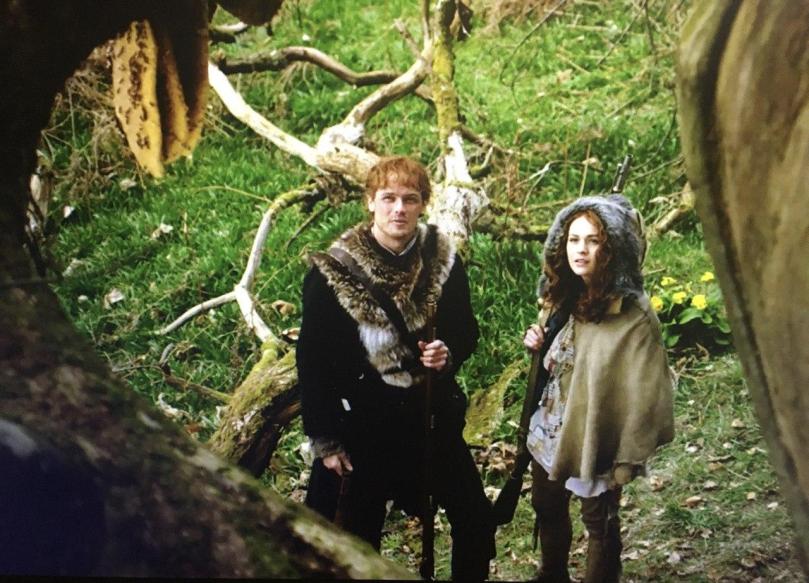
And they find it!
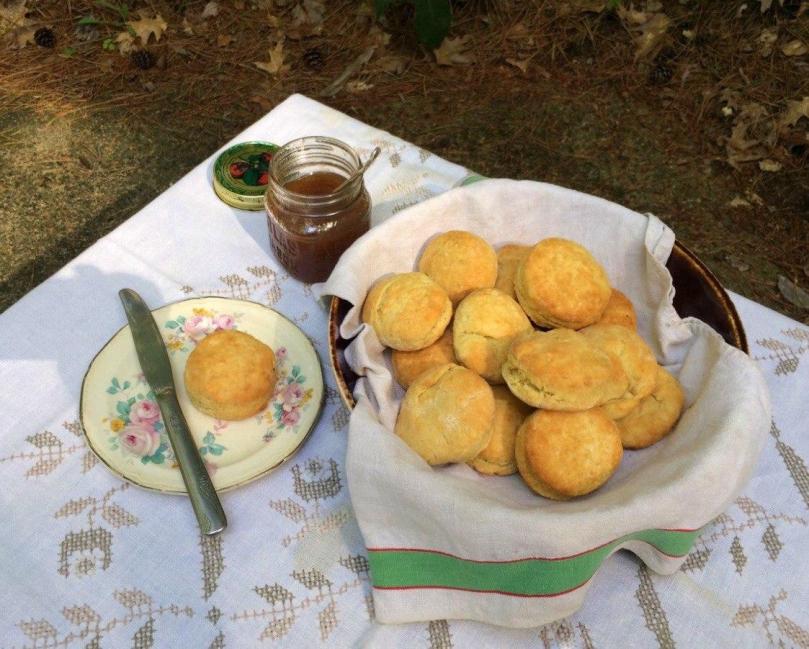
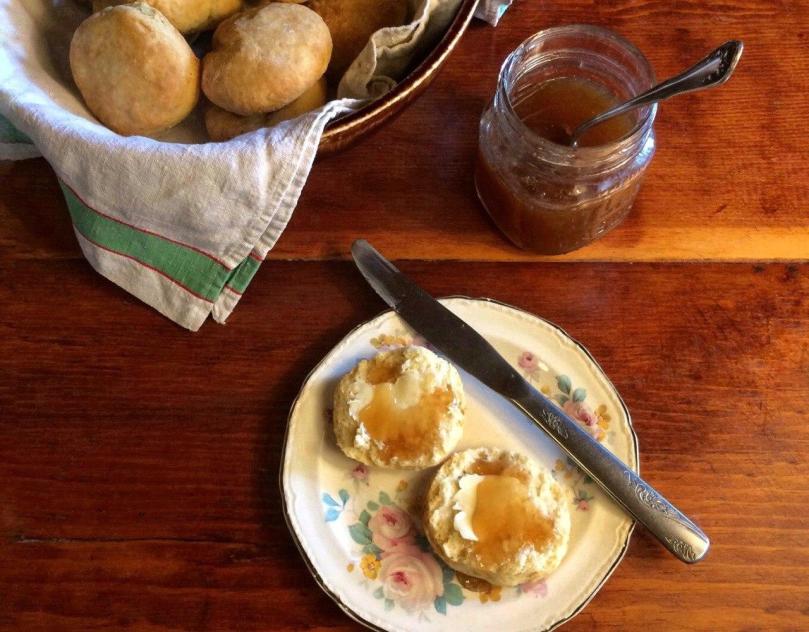
So to pay homage to Outlander, I thought it would be fun to post a recipe for apple honey – yes, honey you can make yourself! – adapted from Mary’s Test Kitchen, and also for bannocks, a type of Scottish biscuit often mentioned on the show. They’re the perfect thing to spread honey on when you get back to your cabin after a long day in the woods. Or to make for an Outlander watch party!
My idea for this post came to me just before a vacation with my family in the northwoods of Wisconsin, where my grandmother owns a beautiful log cabin built in the 1920s (its furniture, tableware and linens are all early 20th century). I really couldn’t have asked for a better place to make an Outlander season 4 tribute recipe.


As I’m not from Scotland and haven’t yet found a time portal to the 18th century, I can’t guarantee that these bannocks are super similar to the ones Claire and friends would have enjoyed. But bannock recipes seem to vary anyway, so I think these will do. They were quite the hit with my family at least.
Freshly baked biscuits are popular with most people, so that was no shocker. But I was surprised by how much they all loved the apple honey! Although most of them do consume traditional bee honey, they really appreciated the unique flavor profile of this one – it’s honey-esque but lighter, with subtle fruity notes. My mom and sister even said they now prefer it to regular honey, which they often find too sweet. I agree, and have never really cared it for that reason.
I recommend making the honey first and the bannocks second so you can enjoy them when they’re fresh out of the oven.
If you prefer to make just the bannocks but are still curious to try vegan honey, a bunch of brands offer it now. See the very end of this post for more details!
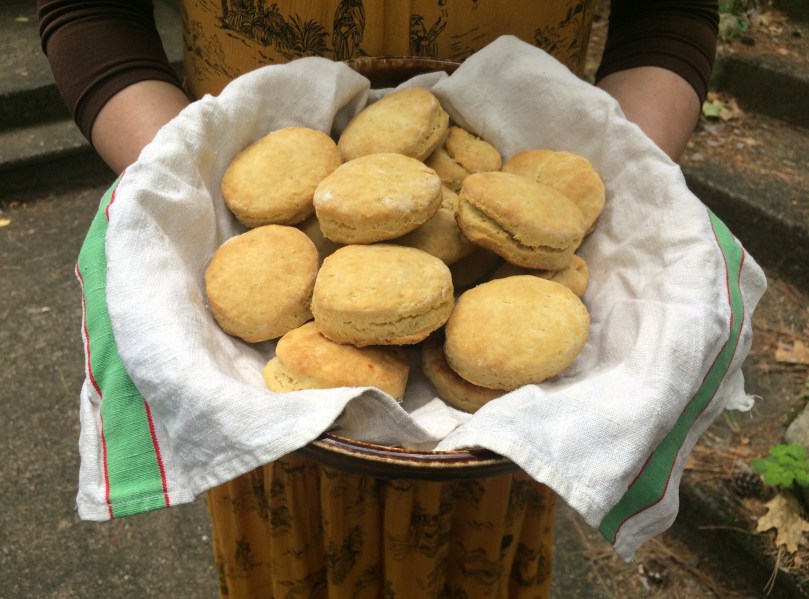


Apple honey
Makes about 1 cup (236 ml) of honey
- 2 cups (475 ml) 100% pure pressed apple juice (with no additives)
- 1 cup (200 g) granulated sugar
- 1 teaspoon freshly squeezed lemon juice
Equipment needed: saucepan, lemon juicer, glass jar, bee costume (optional)


Combine the pure pressed apple juice, lemon juice and sugar in a medium-sized saucepan and bring to a boil on high heat (be careful not to let it boil over). Once it reaches a rolling boil, turn the heat down to medium-low.


Let it simmer, stirring occasionally, until the liquid is reduced by about half or has reached the desired thickness (this may take 20 to 30 minutes). Note that you won’t be able to see the final thickness until it cools, so to test it, chill a spoon in the freezer briefly and dip it in the simmering honey. Once the honey on the spoon has cooled, you can assess its consistency. Note that if you end up simmering the juice too long, you’ll have thicker honey (more like honey jam) but it will still taste nice.
When the honey is done, remove it from the heat and allow it to cool for a few minutes before transferring it to a glass jar. Let it cool completely before putting on the lid.


Bannocks (Scottish biscuits)
Makes around 15 bannocks
- 2¼ cups (280 g) all-purpose flour + extra for dusting
- 4 teaspoons baking powder
- ¼ teaspoon baking soda
- ¾ teaspoon salt
- 3 tablespoons margarine or vegan butter
- 2 tablespoons shortening, or substitute more of the above
- 1 cup (236 ml) soy milk (no substitutions)
- 1 teaspoon apple cider vinegar or white vinegar
Equipment needed: baking sheet, biscuit cutter or drinking glass, rolling pin
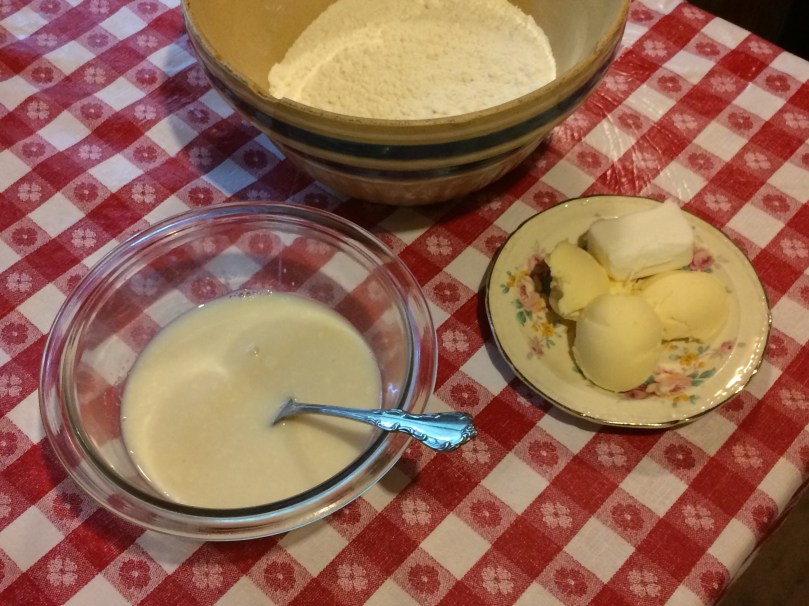
Preheat your oven to 475°F (250°C), then whisk the soy milk and vinegar in a small bowl and set aside (the milk will thicken after a few minutes). Sift the flour, baking powder, baking soda and salt into a large mixing bowl and whisk to combine. Prepare the margarine and shortening.


Transfer the margarine and shortening into the bowl with the dry ingredients. With a sturdy fork or pastry blender, mash these ingredients into the flour mixture until crumbly. Add the soy milk mixture and stir until just combined (be careful not to stir too much as it can make the biscuits tough).


Dust some flour on a clean countertop or cutting board and roll out the dough with a rolling pin until it’s about 1 inch (2.5 cm) thick. With a biscuit cutter or drinking glass, cut out rounds. Transfer these, placed close together, to a greased or parchment-lined baking sheet. Piece or mash the leftover dough together to make a few last bannocks (which may look a little wonky, but will still taste good). Bake in the preheated oven until golden brown, about 10 to 15 minutes. Keep an eye on them while they’re baking to make sure they don’t overbake.
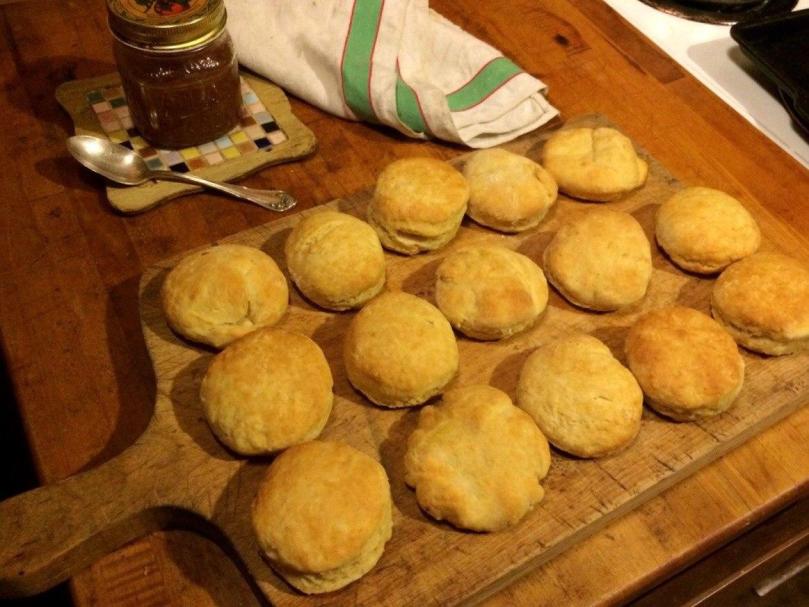
Remove from oven and immediately transfer to a cooling rack or other suitable surface. Now get out your apple honey and (optionally) some margarine or vegan butter, and you’re ready for a picnic or a fireside snack!


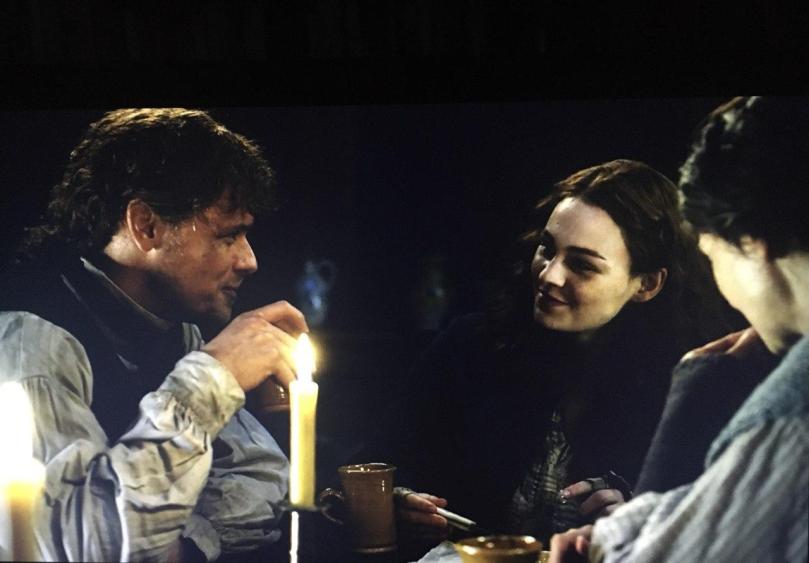
As Claire Fraser and I can both confirm, bannocks and honey taste best when enjoyed with your family!
If you make these recipes, please leave a comment and let us know how they were, and tag @rd.violet on Instagram.
Where to find ingredients…
Shortening: widely available in North America but not, for some reason, in France (I don’t know about the rest of Europe). Substitute more margarine/vegan butter for it.
Vegan honey: In the US, check organic shops for brands like Bee Free Honee. In Europe, English brand Plantbased Artisan honea is a good option (available at Aujourd’hui Demain in Paris) and I have recently spotted a new brand, Vegablum, at Naturalia Vegan in Paris. I actually brought some Plantbased Artisan honea (original flavor) with me to the northwoods just in case my apple honey recipe tanked, and we all ended up liking the homemade one better. But I like their lavender flavor a lot.
Why do some people avoid honey from bees? You’ll find an explanation here.


 Today we have yet another recipe I concocted while visiting my parents back in the US this summer. I’d purchased a bottle of
  I thought it would be fun to make a similar drink with a vegan twist, using Baileys Almande and nice cream (blended frozen bananas) instead of ice cream made from animal milk, and this is the result, which I have named “white squirrel.”


 red-violet.com