My best reads of 2016

For 2016, I set myself the goal of reading 30 books, and managed to pull it off, finishing the 30th one (José Saramago’s The Double) in the last few days of December. As you will see, these are not books published in 2016, just the ones that I happened to read in that year.

It has occurred to me that if you like my blog, you might also share some of my taste in literature. And who knows, perhaps you’ve set yourself a reading challenge for this new year and would like some recommendations. So, without further ado, here are the books I liked most, presented in the order in which I read them.

Lady Susan (1794) by Jane Austen

lady-susanWith the advent of the Kindle, it has become very easy to collect public-domain classics and to make your way through an author’s entire œuvre. I acquired the novella Lady Susan in this way and, since my goal is to read all of Austen’s works, began reading without taking the time to check what exactly it was about, or whether it was considered one of her best or a lesser work. I was thus pleasantly surprised by this very witty story. The exploits of scheming socialite and recent widow Lady Susan Vernon, as she attempts to find husbands for herself and her daughter regardless of the cost to others, are revealed in clever and comical ways by the epistolary structure, which also allows for multiple points of view. Published posthumously, this book suffers from a rather abrupt ending that may be due to Austen’s simply not having had time to finish it, or not intending to publish it. But the story is such a good one that this does not detract much from the overall experience and is not, in my opinion, enough cause to skip it. In fact, it has generated so much interest that two modern novels inspired by or even retelling the story have been published: Lady Susan (a novel), by Phyllis Ann Karr (1980) and Lady Vernon and Her Daughter, by mother-and-daughter authors Jane Rubino and Caitlen Rubino-Bradway (2009). Whit Stillman’s 2016 film adaptation, titled Love & Friendship in homage to an early Austen work, has been much praised. I have not seen it yet myself, so this is one of my goals for 2017! [EDIT: I’ve now seen the film, and it’s only so-so. But the novella is great.]

Pushing Time Away: My Grandfather and the Tragedy of Jewish Vienna (2003) by Peter Singer

9780732290016In the spring of 2015, I happened to be in the right place at the right time and was asked to interpret for Australian philosopher Peter Singer at a press conference prior to his talk at an animal-rights event in Paris. Although I do not normally do interpretation (my specialty is written translation), it was an honor and a pleasure to meet Singer and to help facilitate his interviews with the French media. In between things, I had the chance to chat with him a bit and he mentioned that he had done some translation work himself (from German) for a book he wrote about his grandfather, the Austrian classical scholar David Oppenheim, who perished in a Nazi concentration camp. I found a copy of Pushing Time Away during my next visit to the US and delved in. I was immediately captivated by this unique work, which is part biography, part history (of Vienna, its psychology circles and the war years) and part personal reflection (Singer’s musings on love and courage). To learn about his grandfather, whom he never met, Singer traveled to Vienna and searched through his aunt’s old papers in the hope of finding something that would shed more light on this man’s life. He found letters exchanged between his grandfather and grandmother that tell of an unusual love story and a great deal of open-mindedness for the day. Singer also found academic papers and research Oppenheim carried out for Sigmund Freud before breaking with him over a point of honor and becoming a supporter of Alfred Adler. In all his dealings with his fellow man, Oppenheim showed thoughtfulness, compassion and loyalty. As I read, I came to greatly admire this man, and after getting to know him in these pages felt all the more keenly the tragedy of the way he met his end. It is an important life story that everyone can benefit from, especially at times such as these when the consequences of ignoring George Santayana’s “Those who cannot remember the past are condemned to repeat it” are more chilling than ever.

Call the Midwife: A True Story of the East End in the 1950s (2007) by Jennifer Worth

call-the-midwifeThis book, which is actually the first in a trilogy, came to my attention after I saw the excellent television series based on it. In Call the Midwife, Jennifer Worth recalls her experiences and the stories of people she met while working as a midwife in post-war London’s East End slums and living in a convent with a group of nuns. From the mother of 24 who gives birth to her 25th prematurely under dangerous conditions to the 14-year-old Irish girl who has run away from her unstable home and become involved in prostitution, as well as stories about the lives of the nuns and Worth’s fellow nurses, the book paints a detailed picture of this page in history. You also learn many fascinating details about childbirth that cannot be conveyed in the series as they would be far too graphic (and in any case are undoubtedly better to read about than to see!). It is thus one of the many cases in which the film or television adaptation, while good, is only the tip of the iceberg. I’m hoping to read the rest of the books soon, and then to catch up in the shows. Another goal for 2017.

The Patience Stone (2008) by Atiq Rahimi
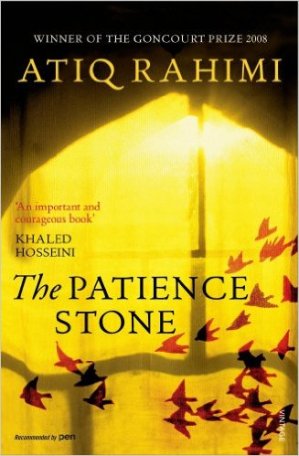
the-patience-stoneI learned about this novel when I discovered Ann Morgan’s A Year of Reading the World project of a few years ago, in which she challenged herself to read a book from each of the world’s 196 countries in the space of one year. And as she went along, she posted reviews of each book on her blog, which she continues to update. I browsed through the entries alphabetically and was fascinated by the very first country. For Afghanistan, she wrote, she wanted something not written by the mega-famous Khaled Hosseini. After some digging, she found Syngué Sabour, written in French by Afghan author and filmmaker Atiq Rahimi, who came to France as a political refugee in 1985. The story, for which Rahimi won France’s most prestigious literary award, the Prix Goncourt, focuses on an unnamed woman who tries to care for her comatose husband alone at home in a city in the clutches of war. His condition creates a complete reversal in the dynamics of their relationship: whereas she has always been under his thumb, he is now dependent on her mercy for survival. As time goes by and the situation in the city grows more desperate, she finds her tongue loosening and begins to confide her frustrations, longings and secrets to the unresponsive man. I was attracted by this plot but also by the fact that I could read it in the original language (as a translator, I am all too aware of how nuances of meaning and effect can be lost in translation, even in the most skilled hands). In an interview, Rahimi explained that he first tried to write this story in Dari but that the words would just not come. It was only in an outside language that he could speak of topics such as the ones in this book. As I read this novel in French, I cannot vouch for the quality of the English translation (by Polly McLean), but judging from her positive review of the novel, Morgan seems to have liked it. I also highly recommend the beautiful 2012 film adaptation, which was directed by the author himself.

Lady Chatterley’s Lover (1928) by D.H. Lawrence

lady-chatterley

I had been familiar with the title of this book for years but didn’t know about its contents or the scandals it created until I saw the documentary series A Very British Romance. In it, host Lucy Worsley tells us about the major English romantic novels that influenced not only later literature but also society as a whole, and more specifically people’s views and expectations of romance. Lady Chatterley’s Lover is mentioned among these, although with its explicit descriptions (and they are quite explicit!) of the protagonists’ sexual adventures, it proved too risqué for its time and was banned until the 1960s. It tells the story of an aristocratic woman with a passionate nature whose husband sustains a spinal injury early in their marriage. He wants a child to carry on his family name and, unable to help his wife conceive himself thanks to his injuries, encourages her to seek outside assistance. He does not, however, count on it being someone from the working class. And neither does she, initially. I sympathized with the plights of most of the characters and found the love story between Lady Chatterley and her gamekeeper lover quite touching. The novel has been adapted for film and television many times, but Jed Mercurio’s 2015 version for the BBC (also the only one I have seen so far) was quite good.

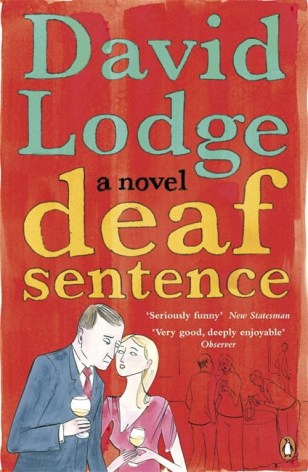
Deaf Sentence (2008) by David Lodge
9780141035703

This intelligent and very funny novel, which I picked up by chance in the foreign-books section of my local library here in Paris, deals with the unlikely combination of deafness and death, although not in a causal relationship. Its central character is a recently retired and increasingly deaf linguistics professor who wants nothing more than to relax and enjoy his new-found freedom, but who must contend with his difficult elderly father and an attractive female grad student with strange demands. Author David Lodge manages to find the right balance between comedy, as his protagonist attempts to rein in his stubborn father’s eccentricities and to conceal his own deafness in a series of improbable but humiliating situations, and poignancy, as he watches the fire inside his proud father dim. The linguistics enthusiasts out there will enjoy the academic points that Lodge (a former literature professor) weaves into his hero’s narrative in a subtle enough way that the lay person will not be put off, as well as his witty plays on words around the concept of deafness. With regard to this last point, Lodge wins extra points from me for the preface in which he acknowledges the difficulty his translators of this book face and expresses appreciation for their efforts.

We Are All Completely Beside Ourselves (2014) by Karen Joy Fowler

we-are-all

I had not heard much about this book, apart from its title, prior to receiving it as a birthday gift this past fall, but was intrigued by the gift-giver’s injunction not to read anything about the book before starting it. And after finishing the book, I can say that she was right! There is something quite unexpected in this story that you will not want to have spoiled for you, and so I will say only what is already revealed in the official synopsis. It is about a young woman who lost her sister, and then her brother, under mysterious circumstances during her childhood and struggles to deal with these losses in a city far from her home where nobody knows her past. We watch her struggling to keep on blocking the memories but inevitably yielding to a pull to uncover and solve them. A very touching story that has much more beneath the surface than one expects.

The Double (2002) by José Saramago

the-doubleI discovered this Nobel Prize-winning Portuguese author ten years ago, when I happened upon a copy of All the Names in Switzerland. Saramago is famous for his very original punctuation style. Rather than setting dialogue apart from the narrative, he flows from one into the other and back again, and uses only a capital letter at the start of a new turn to indicate a change in speakership. Sentences can be very long, composed of series of independent clauses separated just by commas. When Saramago actually uses a period, you know that he really wants to make an impact. While many hate his books for this, it is one of the things that endear them to me. I enjoy the challenge of having to work a bit to follow a story rather than being more passively entertained. I also love Saramago’s subtle dry humor, and the way he has of getting you to simultaneously cheer on and shake your head over the underdog heroes of his works. The protagonist of The Double, a high-school history teacher with an unfortunate first name who seems to be drifting through his life without attempting to direct it, is no exception to this. We are privy to the teacher’s every thought as he struggles with the challenges of his everyday life and then his discovery of an actor in a film who resembles him identically. New characters pop up to complicate things, including his own common sense, which appears at various points to try to make him see reason but most often exits the scene in exasperation. Translated brilliantly by Margaret Jull Costa, the novel’s original title is O Homem Duplicado (The Duplicated Man). It incidentally inspired a recent film titled Enemy, which I saw not long after finishing the novel. All I can say about it is… read the book instead! I will be stubborn and not even link to it here because it falls so far short. Most of the book’s value and humor resides in the main character’s inner experiences, and this is completely lost in the film version, which is also much more of a high-tension psychological drama than the book seems meant to be. But I can imagine Jim Jarmusch or Wes Anderson doing a good job with it. Let’s hope one of them gives it a go at some point!

Honorable mentions

The following are other books I read in 2016 that I wouldn’t recommend to everyone, but that I personally got something from, either because I was fascinated by the story/topic or because analyzing its structure was useful for identifying and reflecting upon various literary techniques and strategies.

Victorian Secrets: What a Corset Taught Me about the Past, the Present, and Myself (2013) by Sarah A. Chrisman. The author’s account of what wearing a corset and incorporating more and more Victorian-era clothing into her daily life taught her about the past and how it changed her present. The book contains some digressions, but I enjoyed it overall and admire what Chrisman is doing. Over time, she and her husband have created a lifestyle for themselves that probably comes as close to the late 1800s as it’s possible to get in our day and age. Photos and more stories can be found on her blog, This Victorian Life.

Helen Keller in Love (2012) by Rosie Sultan. It was recently discovered that Helen Keller (1880-1968), the world’s most famous deaf-blind person, had a brief romance with a man hired as her temporary secretary. Little is known about what happened apart from the fact that any plans they had together were foiled by her family. In this novel, Sultan imagines what Keller’s experiences with this man might have been. Writing from Keller’s point of view is certainly an ambitious thing, and I found some parts of her experience to stretch the imagination a bit much, but it was a fascinating topic to contemplate.

Below Stairs (1968) by Margaret Powell. This book caught my eye because of my interest in shows like Downton Abbey, and in particular the life of the servants. I have to confess that I feel a kind of connection to them due to my experience working as a waitress, a job that makes similar (albeit far less extensive) demands upon the body and soul. The content of this book—stories of Powell’s work as a kitchen maid and then cook at a series of grand houses in the early 20th century—was interesting, but I wished it had been better edited and that she had not glossed over certain potentially more exciting parts of her story, such as how she met her husband, who was her long-hoped-for ticket out of that life. If you begin this book already knowing that it reads like a lightly edited transcript of an informal monologue, you will not be too disappointed.

What were your favorite books from 2016? Share them in the comments. 🙂
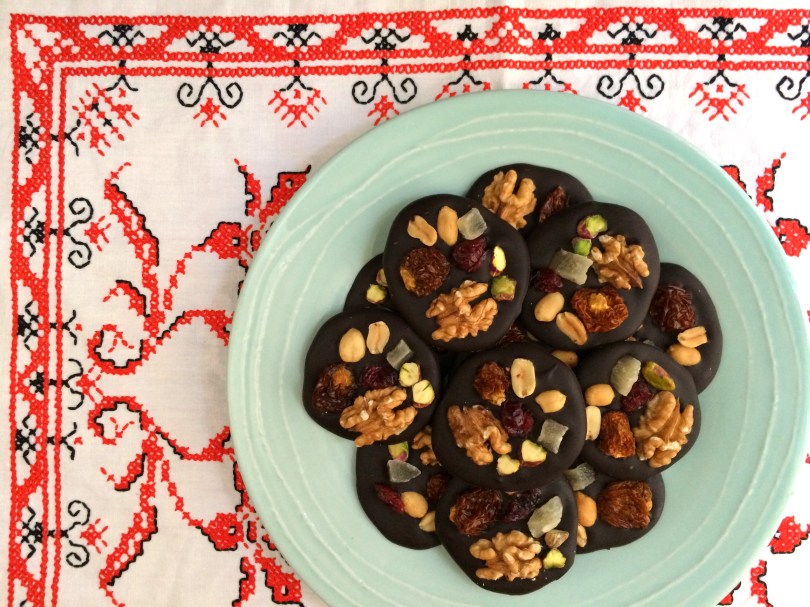
Chocolate mendiants

It’s easy to get overly ambitious around Christmastime and to plan a number of grand meals and complicated desserts, only to wake up one day and realize it’s already the 23rd or 24th and you don’t have the right ingredients or enough time to make everything you wanted. This is especially likely to happen, for some reason, with dishes that you hope to bring to holiday parties, escalating your anxiety levels further. But never fear, your favorite blogger is here to the rescue! Today I bring you a very easy-to-make traditional French confectionery creation that will nevertheless impress just about everyone. And since the toppings can vary greatly, you might already have everything you need in your kitchen cupboards.

These little Yuletide delicacies hail from the south of France and the fruits and nuts traditionally used represent the colors of the robes worn by the friars in four mendicant orders during the Middle Ages. These are gray (raisins) for the Dominicans, brown (hazelnuts) for the Augustinians, white (almonds cut in half) for the Caramelites and purple (fig or cranberry) for the Franciscans. As these friars subsisted on charitable offerings, they were referred to as mendiants (beggars), and the confections took on the same name. These items are also among the 13 desserts served at the end of the traditional Christmas meal in Provence.

Today, many types and combinations of nuts and fruits are used, so feel free to use whatever you have on hand! I used walnuts, peanuts, pistachios, cranberries, physalis and pineapple.

Chocolate mendiants

Makes 12 to 15 mendiants

Ingredients

  • about 6 oz (180 g) dark chocolate in bar form (or chocolate chips)
  • toasted nuts (walnuts, peanuts, almonds, pistachios, macadamia, etc.)
  • dried fruit (cranberries, cherries, raisins, apricot, citrus segments, etc.)
  • other items such as pumpkin seeds, candied ginger, white chocolate chips, toasted coconut chips, colorful Christmas sprinkles, fleur de sel, gold leaf

Equipment needed: double-boiler or metal mixing bowl plus saucepan, parchment or waxed paper

img_4111_ed

Begin by assembling all the fruits and nuts you will use, so that you’re ready once the chocolate has melted.

img_4097_ed

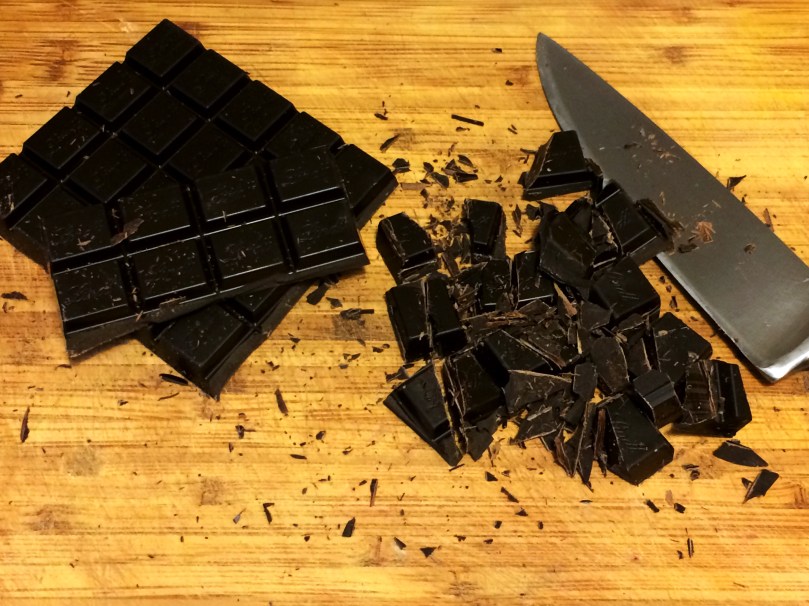
Break or chop your chocolate bar into more or less evenly sized pieces.

img_4103_ed

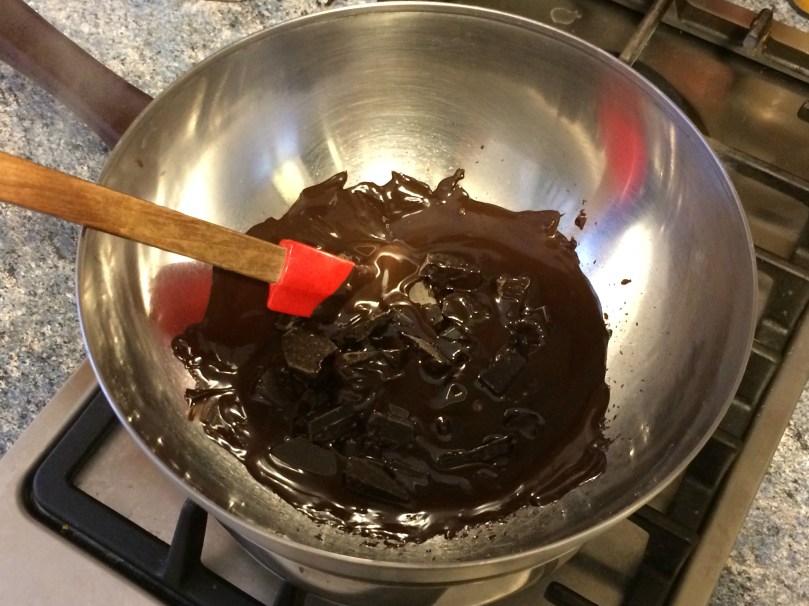
Next, heat some water in a medium-sized saucepan and place a metal bowl on top of it (or a second, smaller saucepan for a double-boiler). Be sure that the water in the saucepan does not touch the bottom of the bowl or second saucepan. Place the chopped chocolate in it and heat, stirring occasionally with a heat-proof spatula.

img_4106_ed

Once all of the chocolate has melted, turn off the heat but keep the bowl on top of the saucepan full of hot water.

img_4113

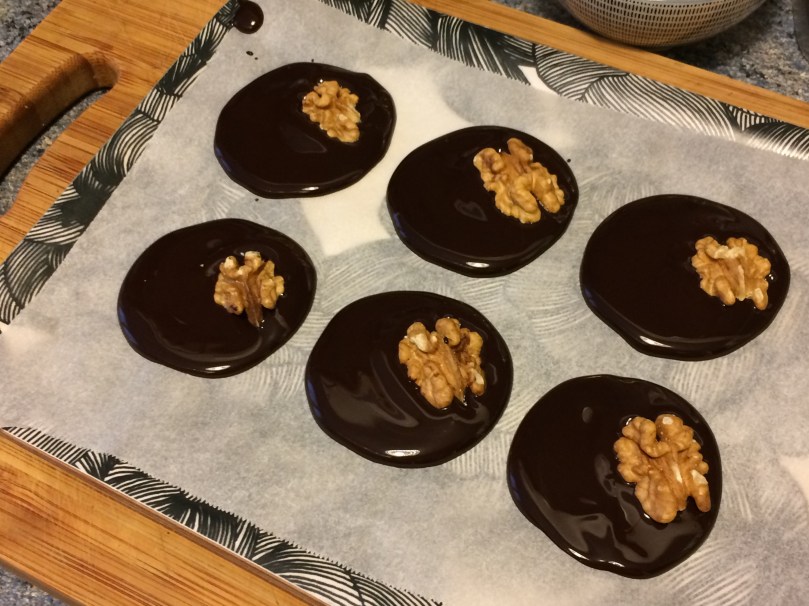
Line a tray with parchment paper and, using a teaspoon (the kind you use to stir your coffee, not the measuring kind), form small, round disks. After creating them, go back and add a bit more on the top of each one to ensure that they are thick enough. Make only six at a time so that you have time to add all the toppings before the chocolate firms.

img_4114

Add your toppings. I like to start with the larger items and then add the other ones around them.

img_4115img_4117

Once you’ve finished the first batch, put the tray in the fridge and continue making mendiants until you have used up the rest of your chocolate. The mendiants will be set after an hour or two of chilling (allow two to three hours to be on the safe side).

img_4179_ed

Serve your mendiants on a platter at a party, or box them up as a gift!

img_4193_ed

These mendiants were my Christmas gift to the concierge of my building, who brings our mail to our doors and takes time out of her morning to give Sésame (who is in love with her) a thorough scratching and petting on the days when my mail includes a package. This year, I included some photos of the furry little guy, which she was delighted to receive (they now adorn her refrigerator door, I was told). 🙂

Variations: change things up with this white chocolate version!

DIY gift wrapping

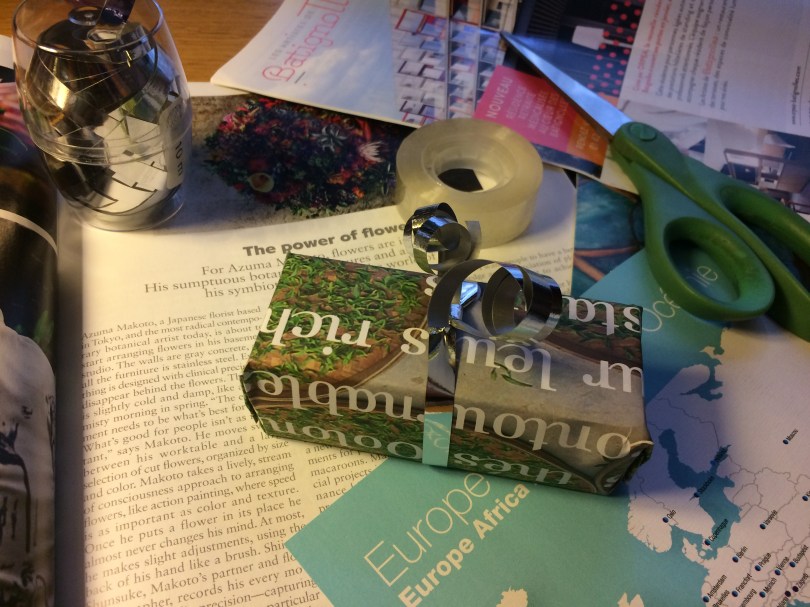
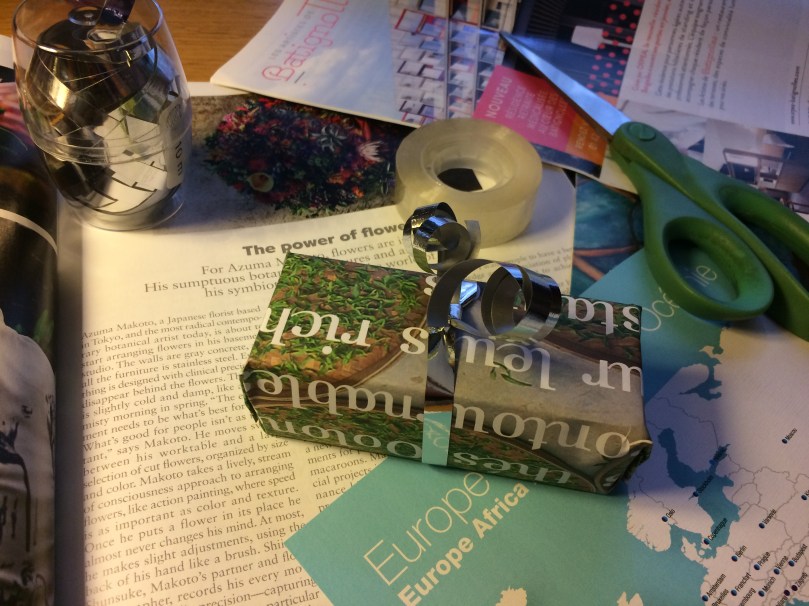
Store-bought gift wrapping has often struck me as a senseless waste, given that it’s usually thrown away after just one use. Of course, it sometimes can be reused without too much social disapproval, for example in a family or among sympathetic friends. But another option is to make your own wrapping paper out of things that were going to be recycled anyway. Not only is it more sustainable and cost-effective, but it’s also a lot more fun. You can select specific images for each gift, either to match one of the recipient’s areas of interest or to hint at the package’s contents. Choosing and matching colors and patterns is also something I find quite satisfying.

img_3705

This year, as I set out to wrap some Christmas gifts, I looked through my magazine piles and selected some free publications that I wasn’t going to look at again. These included an old Air France magazine, a Palais des Thés tea catalogue, a free cinema magazine from a local theater, and the summer edition of my district’s magazine (yes, in Paris each of the 20 arrondissements has its own free magazine to keep residents in the know—nice, huh?). Other things that can be upcycled into gift wrapping are brochures from art exhibitions, newspaper pages, comics and even old maps. Anything with interesting colors and visuals can work as long as the paper is thick enough.

I put some Christmas music on to create a festive mood, made myself some tea and began selecting pages.

img_3712

Magazine pages are especially good for small items. This particular gift was wrapped with a page from the tea catalogue. I then wrapped a smaller accompanying box with a strategically selected section of a page showing a map of Air France destinations.

img_3732

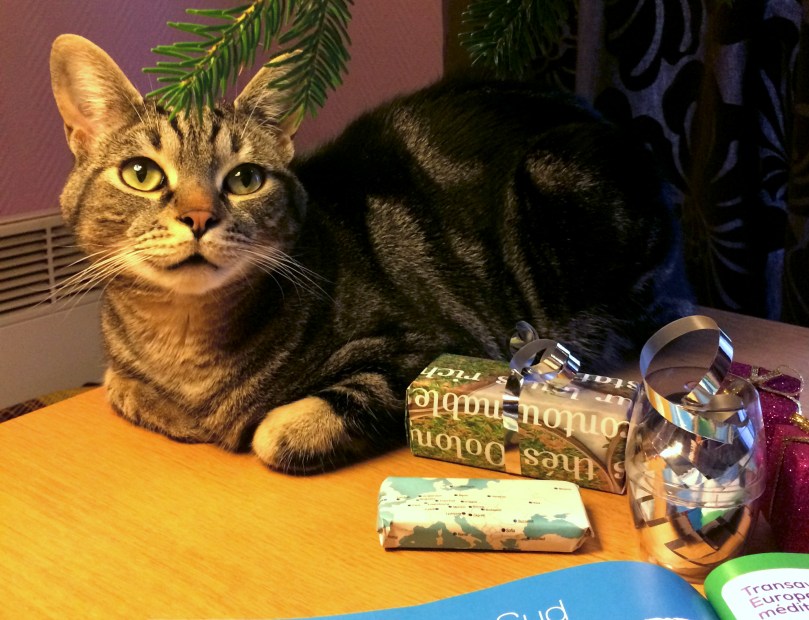
Sésame took a break from his busy day to help out by supervising my work from beneath our “tree” (pine branches in a vase). He approved overall, despite the disappointing lack of cat images.

img_3745

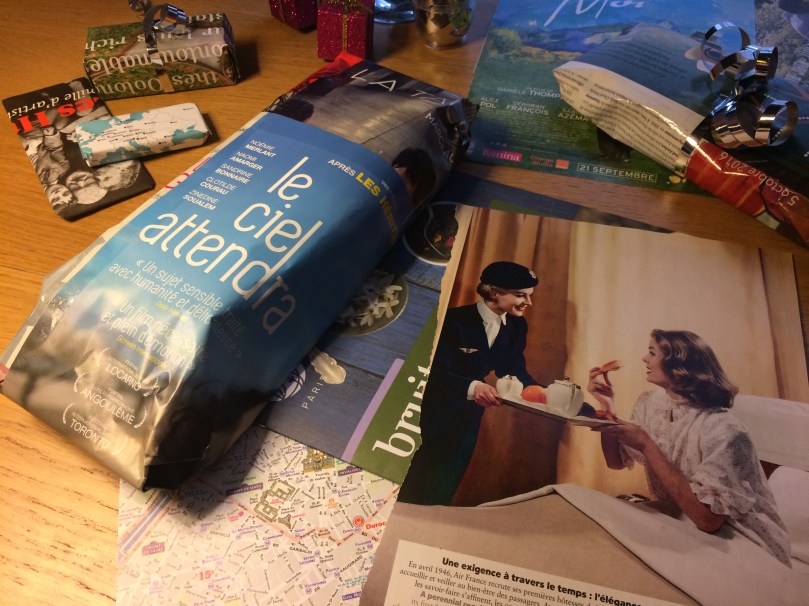
Pages from a cinema magazine are especially nice when you’re wrapping a gift for a film-loving friend. For bigger items, you will need to tape two or more pages together (taping them on one side is usually enough). Here you can see that I’ve chosen to leave the ripped edge as is, rather than trimming it, partly because cutting it would mean losing part of the image, and partly for an artisanal deckle effect. For this kind of homemade item, precision and perfection are actually not what you want.

img_3748

The item I was wrapping was too big for just the two magazine pages to cover it, so I added more to the top, choosing contrasting colors. Keep in mind that the edges will not be visible once the paper is folded around the gift, but with some maneuvering you can probably get the right part to show.

img_3758

Finally, add some colorful ribbons and possibly some washi tape, and you’re done!

img_3986img_3985img_3988img_3761img_3980

Chocolate & peanut butter pies

10159After living in France for almost eight years now, and having traveled a lot before that, my sense of nationality and culture is somewhat fluid. I’m not French, but I also don’t really feel American anymore. Yet I still have a taste for certain American foods that are not always met with enthusiasm by people from other places. One of these is peanut butter. Often relegated to obscure shelves of mainstream French supermarkets, including the “world cuisines” section, peanut butter is not a guaranteed find at the average grocery store. And when you do encounter it, it’s sometimes quite expensive or not very good. But about a year ago I discovered a nice one from the Ethiquable brand in the fairtrade section of my local Franprix. It comes from a woman-inclusive cooperative in Nicaragua and isn’t any more expensive than most of its non-fairtrade (unfairtrade?) counterparts. And so, safe in the knowledge that I have this steady supply available, I have been freely experimenting with peanut-based recipes like Thai satay sauce, peanut-butter cheesecake (yep!) and of course, desserts with the magical peanut butter and chocolate combination, of which we will see an example below!

First, some history, and the answer to a pressing question. Is peanut butter actually from the United States? A widespread legend has it that it was invented by George Washington Carver (1864-1943), an American botanist and inventor who was born into slavery. But in 1884, before Carver had even begun studying botany, pharmacist Marcellus Gilmore Edson of Canada patented a process to make peanut paste. And much, much before that, as far back as the first century of the Common Era, the Aztecs also mashed roasted peanuts into a paste. So, it’s actually a Mexican-Canadian creation.

But Americans are still very fond of it. We are the world’s leading exporter and, according to this source, we eat around 700 million pounds (317 million kg) of peanut butter per year (about 3 pounds/1.4 kg per person). That’s not too hard to believe. When I was growing up, children brought their lunch to school, and very often it was a peanut butter and jelly sandwich. I carried mine proudly in my metal Pigs in Space lunchbox alongside carrot sticks and a Hostess cupcake. Now, peanut butter has apparently been banned from most schools due to the high number of kids with peanut allergies. I don’t understand how this allergy can have become so common, but that’s a matter for the experts to solve.

So the other week, I began experimenting with chocolate-avocado mousse, and the idea came to me to pair it with peanut butter in some way. I looked around my kitchen and spotted my set of mini-pie plates, and was on my way. The crust proved a bit tricky. My first version was made of ground almonds with peanut butter as a binder, but it wasn’t peanut-buttery enough for me. A second attempt with the addition of toasted millet (for crunch) wasn’t quite what I was looking for. Finally, a third try with a combination of ground roasted peanuts and ground almonds was just right. The rich-but-light texture and slight fruitiness of the mousse is nicely complimented by the earthy, salted peanut crunch of the crust.

As desserts go, this easy, no-bake recipe is definitely on the healthy side. It does contain fat (from the peanuts, avocado and coconut), but has no cholesterol or refined sweetener. And it packs a punch as far as protein goes, so the next time someone asks you where you get your protein, you know what to answer!

Chocolate & peanut butter pies

Makes two mini-pies (5 in./12 cm in diameter at widest point) 

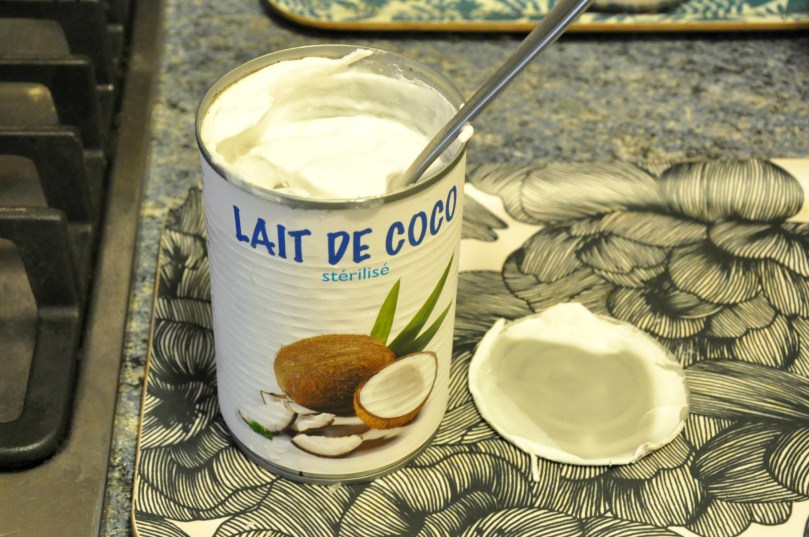
Note: several hours before making this recipe, place the coconut cream/milk and your metal mixing bowl plus the beaters of your mixer in the refrigerator to chill. The lower temperature helps ensure a nice firm whip.

Ingredients

For the peanut crust

  • 1/2 cup (75 g) salted peanuts, whole (snack/party kind)
  • 2 tablespoons (12 g) ground almonds
  • 2 tablespoons peanut butter, either creamy or chunky
  • 1 teaspoon maple syrup

For the chocolate mousse filling

  • 1 large avocado (9 oz./250 g weighed when whole)
  • 2 tablespoons unsweetened cocoa powder
  • 2-3 tablespoons maple syrup, or more to taste
  • 1/2 teaspoon vanilla extract
  • small pinch salt

For the whipped coconut cream

  • 3/4 cup (200 ml) coconut milk (full-fat) or coconut cream, chilled
  • 1-2 tablespoons maple syrup
  • 1/4 teaspoon vanilla extract

For the garnish: roughly chopped bar chocolate, cocoa powder, finely chopped peanuts or gomasio

Equipment needed: food processor for the nuts, electric mixer with beaters to whip the cream, plastic wrap, mini-pie plates (or small bowls/ramekins)

img_3192

First, grind the peanuts by pulsing them just a few times. Be careful not to grind them too much, or (depending on the power of your processor) you could end up with something closer to peanut butter and the structure of the crust will not hold up as well. I stopped when my peanut chunks looked about like this (see next photo):

img_3193

Now add the ground almonds, peanut butter and maple syrup. Don’t be tempted to add more maple syrup, as it could make the crust too soggy. It’s okay if the crust is not especially sweet, since the filling and whipped cream will be.

img_3198

Combine the ingredients, mixing and pressing the mixture against the sides of the bowl with a large spoon or spatula (alternatively, knead with your hands) until you have a sort of sticky dough. Taste it at this point and if it seems to be lacking salt, for example if you have used a natural peanut butter that contains no salt, consider adding a small pinch.

Rip off a piece of plastic wrap that is the length of two mini-pie plates. Cover the inside of the pie plate with one end of it and press half of the crust dough into the plate as shown above. Be sure to fill the tops of the ridges well to get a nice result when the crust is unmolded. Then double the plastic wrap back over the top to cover the crust. Repeat with the second pie plate.  If you’re making the crusts well ahead of time, you can place them in the refrigerator to chill at this point, stacked together if space is a problem, but if you will be finishing and serving the dessert right away this step is not necessary.

img_3208

Cut the avocado in half, scoop out its flesh and transfer to your food processor. Add the cocoa powder, maple syrup, vanilla extract and salt. Process until smooth, stopping to scrape down the sides once or twice.

img_3209

Now you have your mousse! Taste it and add more maple syrup if you want it to be sweeter, and more vanilla or cocoa powder if it seems to need it (the results of different cocoa brands can vary). Process further if you have added something, and be sure that no chunks of avocado remain.

img_3226

Fill the crust with the mousse. The crust should still be in the pie plate at this point, as the filling process could make it crack if it were unsupported. Next, holding onto both sides of the plastic wrap, carefully lift the crust out of the pie plate and transfer it to a small dessert plate, removing the plastic.

img_3217

Take the pre-chilled coconut milk or cream, metal bowl and beaters out of the refrigerator. Transfer the milk or cream to the bowl. If using a can of coconut milk, stir the cream and liquid part together before measuring. Add the maple syrup and vanilla extract and beat on high speed until soft peaks appear (this will take a few minutes). Continue until you have reached the desired thickness, but be careful not to overbeat as it can become too thick. If this happens, do not despair as it can be salvaged—just continue beating and it will eventually revert to a more liquid state (unlike overwhipped dairy cream, which turns into butter!).

When ready to serve the dessert, top each pie with a dollop of the cream and decorate the top with a garnish of roughly chopped bar chocolate, a sprinkle of cocoa powder, some finely chopped peanuts or a pinch of gomasio.

img_3241

Note that the avocado will begin to oxidize and darken upon contact with the air, so it is best to fill the crusts not long before they will be served. Alternatively, if the top has already darkened, you could opt to cover the entire top with the whipped cream. The lighter color of the mousse inside would then not be noticeably different from the color of the top, and you would also have an interesting tiramisu effect.

img_3289

Variations:

  • Make the crust with ground almonds and almond butter (no peanuts) for a chocolate & almond version.
  • Add banana to the mousse for a tropical flavor.
  • Serve parfait-style in clear glasses so that the various layers show, alternating with additional layers of whipped cream and chocolate mousse.

Decking the halls

I’m not usually one for holidays. Halloween? Eh. Fourth of July? Don’t really feel it. New Year’s Eve? I guess. I just don’t really get worked up over many of them. But Christmas is another story. Not for the consumerism aspect—in fact, a few years ago, my family and I agreed not to exchange Christmas gifts anymore unless we see each other in person—but for the decorations, the carols, the old movies and the joyousness of it all. Maybe it’s also because everything instantly takes a vintagey turn once this holiday comes around.

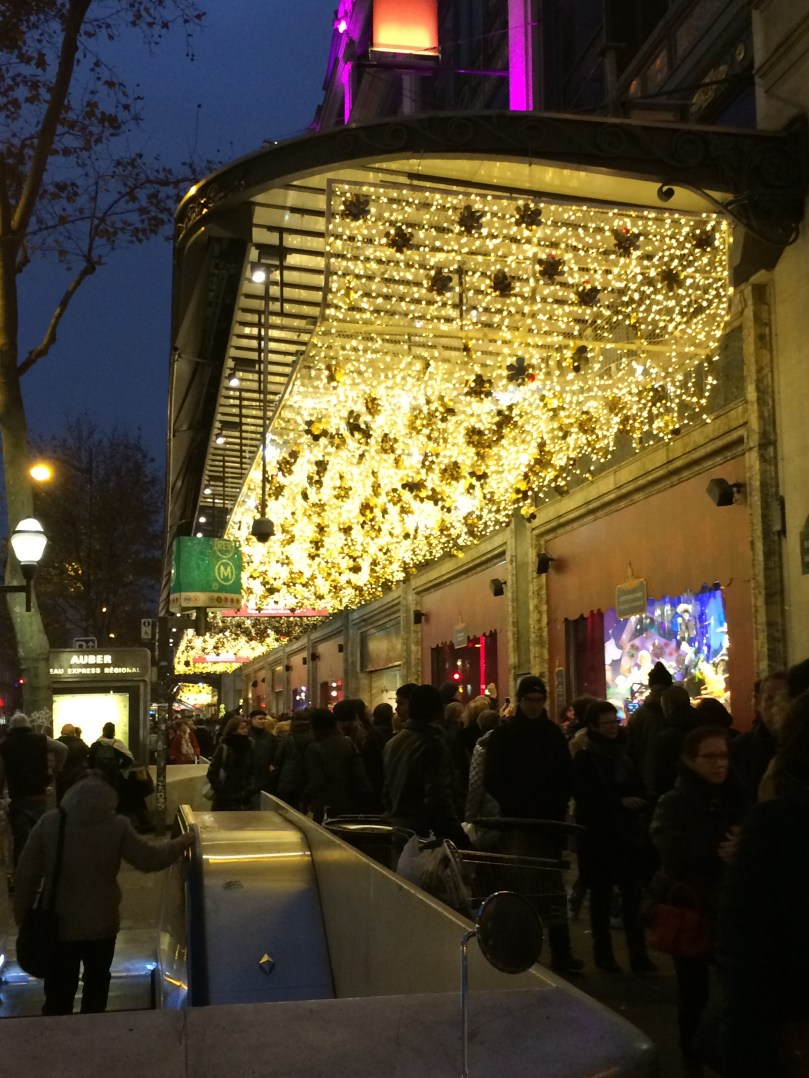
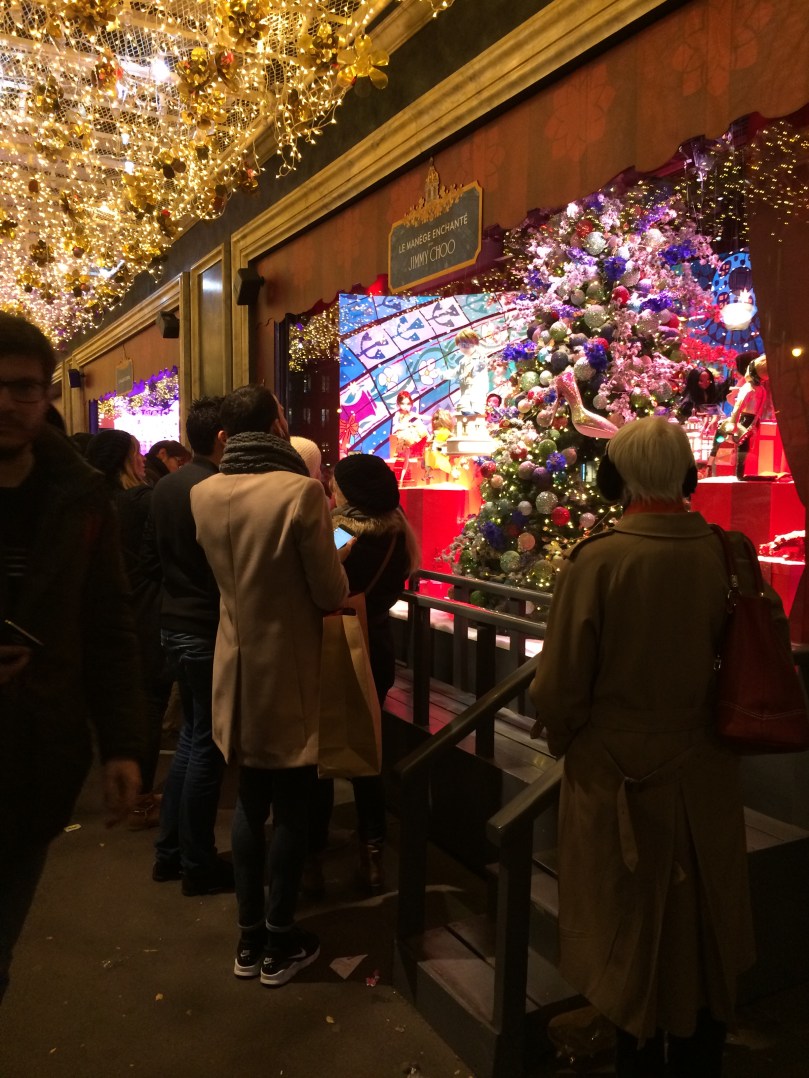
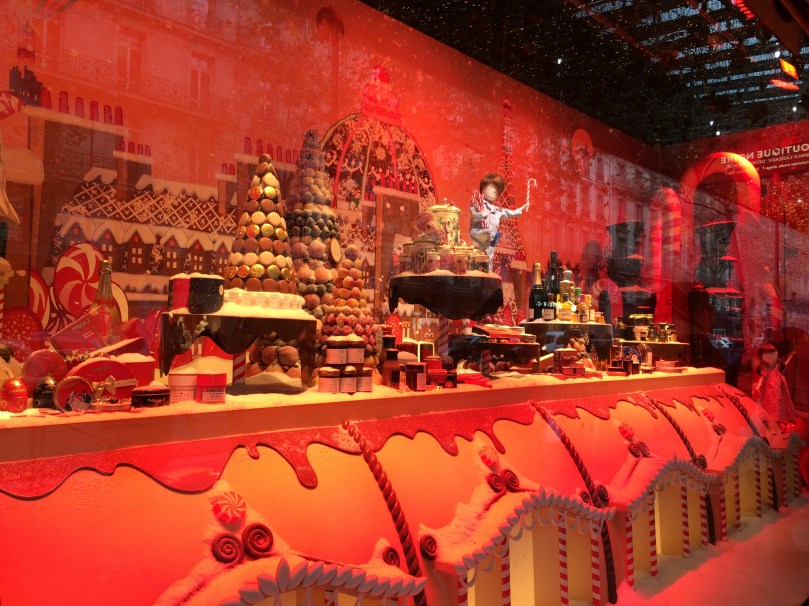
Anyway, when I’m in Paris in the holiday season, one of my favorite things to do is to check out the window displays of the beautiful old department stores on boulevard Haussmann. Every year, Printemps and Galeries Lafayette unveil elaborate holiday-themed dioramas, complete with animatronic dolls, highlighting the apparel, shoes, confectionery and other high-end wares on offer. At Printemps, they spend three months creating the props for the displays, which are designed a year in advance. An estimated 10 million people come to see them annually, and they’re naturally a hit with children, who love climbing up on the wooden platforms to get a closer look.

The best display I’ve seen so far, a few years back, showed a swarm of little Karl Lagerfelds preparing to direct a fashion shoot on the streets of a monochromatic Paris as catwalk music played.

388755_10150483513860690_634803996_n400275_10150483513540690_1557625145_n

So, the other day, I happened to be in the area and decided to check out this year’s windows. This year, the showcases tell the story of Jules and Violette, two children with old-timey names who wake up in the store in the middle of the night and amuse themselves in the various departments, meeting strange characters along the way. Some 70 dolls and marionettes were created over a three-month period for these dreamscapes, and the installation took two weeks. Below is a selection of my photos, but don’t miss this interesting five-minute documentary showing everything in motion.

img_3132

img_3137

img_2996

img_3012

img_3136

img_3134

img_3142

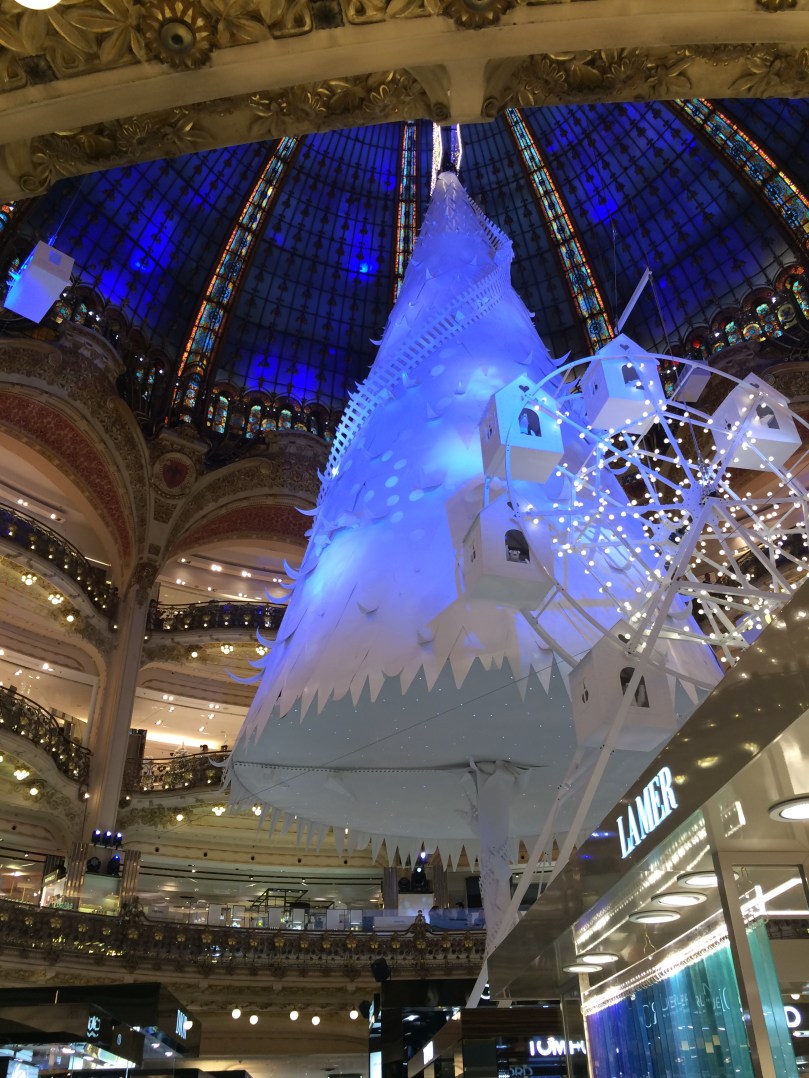
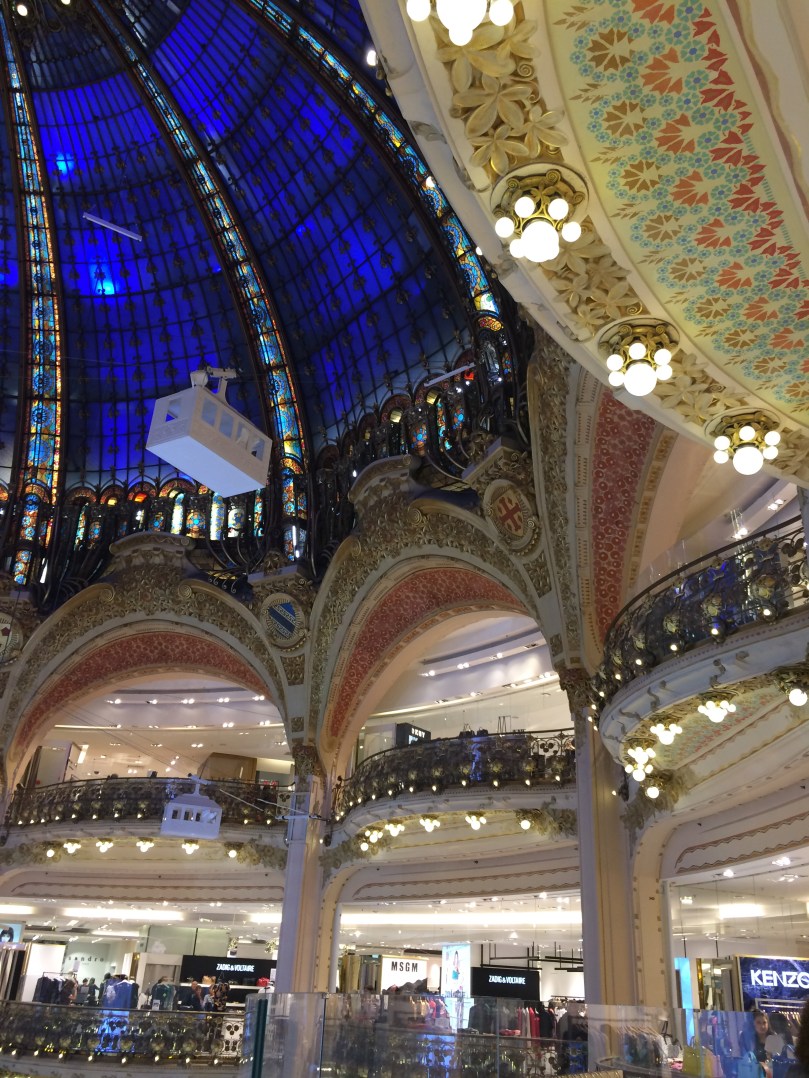
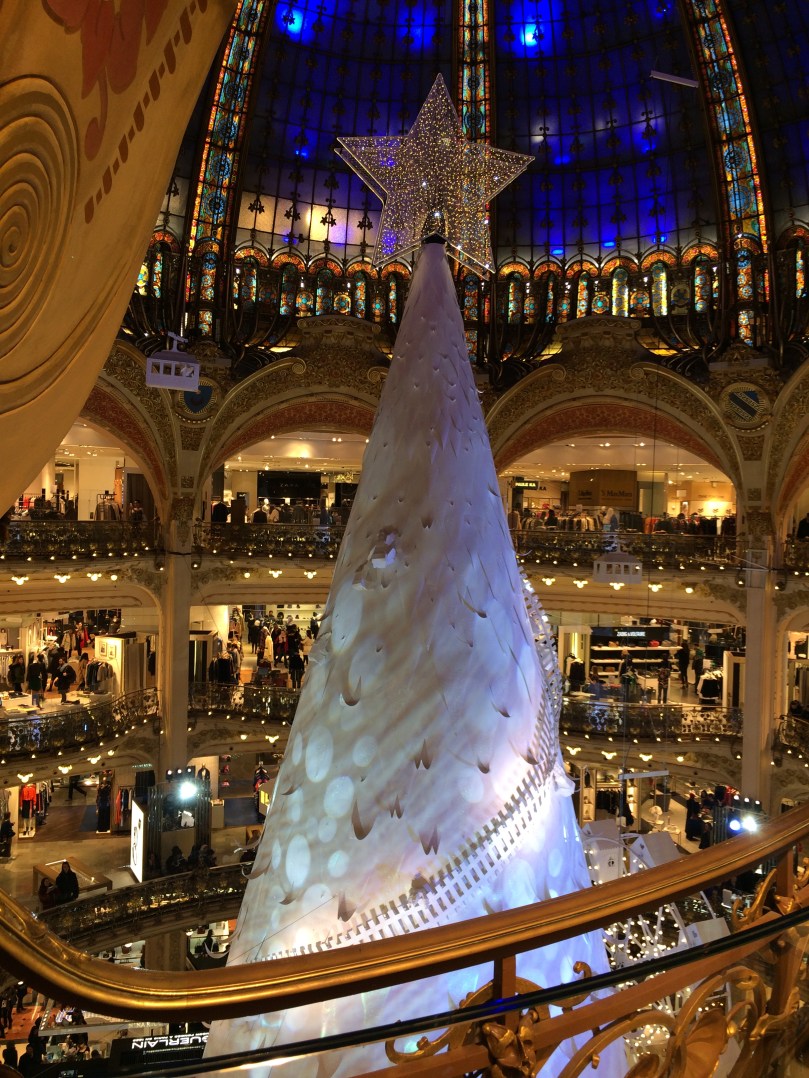
Inside Galeries Lafayette there’s always a Christmas tree set up under the stained-glass cupola. The beautiful 1912 Art Nouveau structure alone is worth the detour, with its graceful undulating balconies decorated with floral motifs and gold paint. As you ascend the levels, you get an increasingly interesting view of the tree, animatronic decorations (polar bears in aerial cable cars, this year) and the bustling perfume and cosmetics department on the ground floor below. Altogether, it looks like some kind of futuristic, self-sufficient Edwardian city enclosed under a weatherproof dome, which strikes me as a pretty cool place to live.

img_3094img_3101img_3114img_3120img_3127

While there, I stopped in at Lafayette Gourmet across the street from the main building with the cupola. Offering high-end deli foods and grocery items of every description, it reminds me a bit of Harrods in London. But this is something that really deserves a post of its own, so more on that another time.

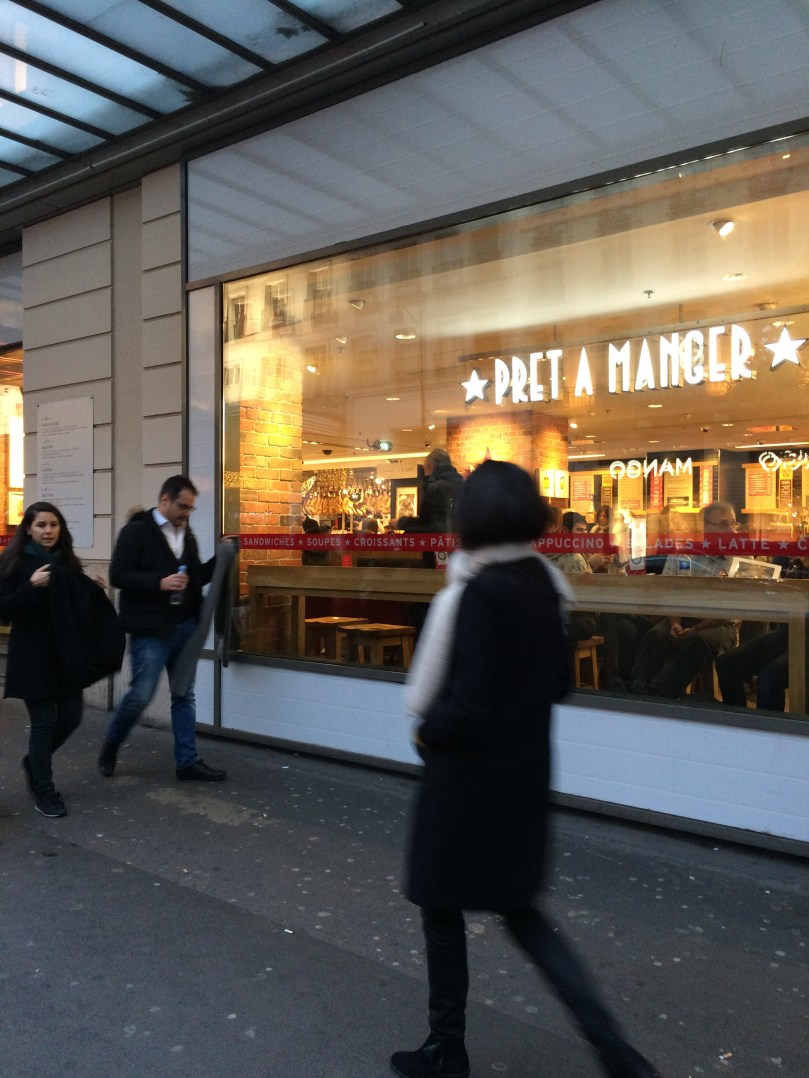
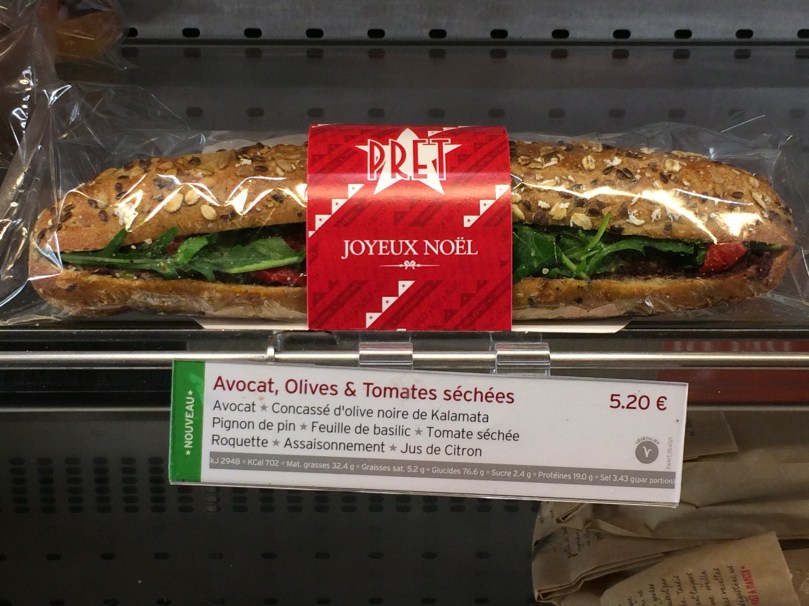
To my delight, another new arrival on boulevard Haussmann is a Prêt à Manger! People reading these lines from England may despair of me, as this chain (which, despite the name, is English) is tuppence-a-dozen over there, and you can hardly go two blocks without passing one. But I actually really like Prêt, or at least the concept of it—we have a similar (Belgian-owned) chain in Paris called Exki—fast food that isn’t so unhealthy. Anyway, I wandered into this Prêt mainly out of curiosity, to see if they had any veggie things. Although there’s usually a vegan option at the ones in London, in Paris I wasn’t expecting all that much. But what did I find? A vegan Mediterranean sandwich with avocado, Kalamata olives, pinenuts, arugula, basil and sundried tomatoes—and only one of them, sitting there as if waiting just for me. I could not resist. What’s more, they also have soy milk for hot beverages (another rarity in France). A yummy sandwich AND a cappuccino? That was the cherry on top of an already nice afternoon.

img_3077

img_3036

img_3038

So if you ever find yourself in Paris in December, these are a few things you can do to soak up the holiday ambiance. Free of charge, unless of course if you opt for a sandwich and hot beverage!

Catalan pasta paella

9788483308868When I arrived in Barcelona earlier this year for my three-week stay, I hoped to learn a lot about the city, the region of Catalonia and Catalan language and culture. Among my most burning questions was what is Catalan cuisine exactly, and how it is different from the food of the rest of Spain?

Answers soon began to appear. One afternoon at the beginning of my stay, I entered a bookstore in the city’s old town in search of a small spiral notebook. As I browsed, I noticed a shelf of cookbooks, some of them devoted to traditional Catalan food. Aha! And I had just begun wondering how easy it might be to adapt the recipes to plant-based versions when my eyes fell on the cover of Vegana i Catalana, whose title left no room for ambiguity. Santa Eulàlia, the city’s patron saint, was clearly smiling on me. It was my lucky day!

The book is in Catalan, but as a translator who speaks French and (some) Spanish, and furthermore is always up for a linguistic challenge, I didn’t see that as any serious obstacle—Catalan is like a combination of the two. I browsed through the pages, recognizing the names of some dishes I’d already heard of (pa amb tomàquet, crema catalana) and soon forgetting my recent resolution not to buy any more new cookbooks for a while. What’s more, according to the book’s publication date, it had just been released a few weeks earlier. Who was I to question the workings of fate?

mcastells
Marta Castells

In Vegana i Catalana, author Marta Castells, a cooking instructor who focuses on healthy  cuisine and a holistic approach to food, has revisited the classics of Catalan cooking for people of the region who would like to shift to a more plant-based diet but still want to enjoy the traditional flavors they know and love.

During my time in Barcelona I also dined at the renowned vegetarian restaurant Teresa Carles. I asked the server to point out only the (vegan) Catalan dishes among the wide variety of items on the menu, and soon settled on a dish called rossejat de fideus.

img_5400b
Fideus dish at Teresa Carles

A pasta dish prepared risotto-style and served in a rustic paella pan, it included mushrooms, seaweed and the chef’s own “cocosepia” blend made with coconut and black garlic (giving the dish a darker color). It was topped with a few spoonfuls of allioli, a garlic sauce (similar to the French aïoli). It was fantastic. I was naturally quite pleased, when I returned to my copy of Vegana i Catalana, to find a very similar dish called fideuada in its pages. There was even a recipe for the garlic sauce.

Back home in Paris, I translated and tried my hand at a few of Castells’s recipes, including the fideuada. At the same time, in a quest to continue learning about traditional dishes, I ordered a used copy of Catalan Cuisine by Colman Andrews, which has recipes but is more like a treatise on the history and food culture of Catalonia. It’s a great resource offering a wealth of information, and although it contains some recipes that call for animal products, others are (accidentally) vegan and, with some creativity, most can be veganized (another challenge that I love).

Andrews informs us that the Moors were the ones who brought pasta to Catalonia, by way of Greece, back in the eighth or ninth century. Called alatria at the time by the Spaniards (from the Greek itria), pasta is mentioned in the Libre de Sent Soví (c. 1324), the first known Catalan cookbook. Today, Catalonia’s most popular native pasta is fideus (the name is thought to derive from the Arabic fada, meaning to overflow): a short, very thin noodle similar to Italian vermicelli but developed independently and prepared in a different way. Rather than being boiled in water and then mixed with a sauce, it is cooked slowly in a broth, like risotto, absorbing flavor along the way.

Marta Castells and her publisher have kindly allowed me to share my English translation of her fideuada recipe, to which I have also made a few small adapations based on what worked best for me. First, not having easy access to real fideus pasta here, I bought Italian vermicelli and needed slightly less broth than the amount in the recipe (in the book it’s 1 cup pasta to 3.5 cups of broth, and in my adaptation it’s 1.5 cups pasta to 3 cups broth—feel free to try the first set of proportions if you’re making this with actual fideus.). I also opted to brown the pasta in a dry pan instead of with oil, and finally added some black olives that were not called for in the original recipe. In the original allioli recipe, the silken tofu is marinated in the garlic, which is later removed, but I opted to incorporate the garlic and skip the marination step.

This dish has already become a new favorite for me, one I expect to make again and again. The pasta is very flavorful, having absorbed the garlicky, paprika-seasoned vegetable broth, and finishing it off under the broiler gives it a nice crispy top. Pan-roasted smoked tofu and olives give the dish robustness and aromatic depth. The garlic sauce, a revisited version of allioli with eggs (allioli amb ous), is simply divine and provides a nice textural contrast to the crispy noodles. While allioli is often described as a mayonnaise, I didn’t want to do that here because this allioli, made with silken tofu, garlic, olive oil, turmeric for color and kala namak salt (another addition of mine), is so creamy and smooth that to call it a mayonnaise, triggering associations with the store-bought kind, would be to do it an injustice.

So here, at last, is the fideuada or, as it can also be called, Catalan pasta paella!

dsc_0012

Creamy garlic sauce (allioli)

Makes 1/3 cup sauce, enough to top two servings of Catalan pasta paella

Ingredients

  • 4.2 oz (120 g) silken tofu (about 1/3 cup)
  • 1 clove garlic
  • 1 tablespoon olive oil
  • pinch kala namak (Indian “black” salt), or regular salt
  • dash ground turmeric

Equipment needed: small food processor or blender

Finely mince the clove of garlic, or crush using a garlic press. Place the silken tofu, garlic and olive oil in  a mini food processor. Add a dash of turmeric (for color—only a tiny amount is needed), and pinch of kala namak (its sulfurous flavor recreates an egg-like taste but if you cannot find this salt, regular salt is fine). Process, scraping down the inside of the bowl occasionally, until you have a homogeneous, creamy sauce. Taste and add more salt if desired. Transfer to a small bowl and chill until needed.

This sauce can also be used as a base for a creamy salad dressing or tartar sauce.

dsc_0102

dsc_0107

dsc_0023

Catalan pasta paella (fideuada)

Serves 2

Ingredients

  • 1.5 cups (125 g) egg-free vermicelli pasta
  • 4.2 oz. (120 g) firm tofu, preferably smoked
  • 3 cups (700 ml) vegetable broth
  • half a fresh tomato or 1/4 cup canned stewed tomato
  • 2 cloves garlic
  • 1/2 teaspoon ground paprika
  • 1 tablespoon tamari or soy sauce
  • 2 teaspoons olive oil
  • 1/3 cup salty black olives (optional)
  • 1/3 cup creamy garlic sauce (recipe above)
  • fresh basil leaves or other herbs, for garnish

Equipment needed: large skillet or paella-type pan, small skillet, mortar and pestle (optional), oven (optional).

Begin by chopping the tofu into bite-sized cubes. Place 1 teaspoon olive oil and 1 teaspoon tamari or soy sauce in a small skillet over medium heat.

dsc_0092dsc_0094

Once the pan is hot, add the tofu and sauté, stirring occasionally, until browned on both sides. Transfer to a plate covered with paper towel and set aside.

dsc_0058dsc_0066

Next, prepare the garlic, paprika and tomato mixture, which you will incorporate into the vegetable broth. Finely mince the garlic and place in a mortar with the 1/2 teaspoon ground paprika and crush. If you don’t have a mortar, you can skip this step, but in that case be especially sure that the garlic is finely minced. Finely dice the half-tomato.

dsc_0082

Add 1 teaspoon olive oil to a non-stick pan over medium heat. Once the pan is hot, transfer the garlic-paprika mixture to it and add the diced tomatoes. Sauté, stirring frequently. When the tomato has broken down and the garlic is smelling nice (7 or 8 minutes), remove from heat. It will resemble the mixture in the photo above.

dsc_0084

Scrape this mixture into a bowl containing the 3 cups of (warm) broth  and whisk to combine. If making your broth from bouillon cubes, err on the side of less bouillon since the black olives (if using) are quite salty. You can always adjust the saltiness later with more tamari or soy sauce.

dsc_0111

Then, place a large non-stick or seasoned skillet or paella pan over medium heat. When the pan is hot, add the vermicelli (no oil is needed, but if you want to use it, add 2 teaspoons). You will soon see the color of the pasta on the bottom begin to turn golden pretty soon. Pay close attention and stir frequently to ensure even browning.

dsc_0113

Continue browning the vermicelli, stirring frequently, until it reaches the shade you’re aiming for. If you do a Google images search for fideus, you’ll see that the pasta is sometimes a lighter color (with a milder taste), and sometimes darker. The level of darkness is up to you.

dsc_0121

Not long after the pasta reached this color (about 13 minutes), I stopped the browning by beginning to add the broth.

dsc_0124

Add the broth in stages, about a half-cup (120 ml) at a time, stirring as you go. Wait until the pasta absorbs the broth before adding more. When you have added about half of the broth, incorporate the tofu and optional olives. Continue all the broth has been added to the pasta. Taste occasionally and check for doneness; if the pasta is completely cooked but you still have a bit of broth left over, you don’t have to add it. Adjust the seasonings if desired, adding a splash or two of tamari if you want it to be saltier.

This step took me about 20 minutes (after the browning), so this dish definitely counts as slow food! But it’s well worth it.

dsc_0147

Preheat your oven, on broiler mode, to 450°F (about 230°C) and place the skillet under the broiler for 5 minutes to finish the dish. This will make the top crispy, but is not an essential step so can be skipped if you are ovenless.

dsc_0199

The dish is now ready to be served! Transfer the pasta to two shallow bowls or plates, distributing the tofu and olives evenly, and top with a generous dollop of the garlic sauce. Garnish with fresh basil, parsley or other herbs. Serve with the remaining sauce on the side so people can add more.

fideuada_2

Variations:

  • Instead of tofu, use lightly pre-cooked (still firm) slices of sweet potato, pumpkin, zucchini, artichoke, broccoli florets or any other vegetables that strike your fancy.
  • Consider mixing in some additional large chunks of fresh tomato at the middle of the broth-absorption step (so they’re warm and softened but not broken down into sauce).
  • Create a “seafood” version using vegan shrimp, or a mix-and-match paella by also adding slices of vegan chorizo (a Spanish sausage).

Barcelona’s best and brightest

vegnews-december-2016-450x600bA few months ago, I had the chance to spend three weeks in sunny, veg-friendly Barcelona. I owe this good fortune in part to my choice of career, since in the freelance life there isn’t all that much to stop you from packing your bag and heading somewhere new—like a turtle with its shell, you really only need your laptop with you (although mine feels about as heavy and cumbersome as a person-sized turtleshell).

The most tangible result of my stay in Barcelona is the VegVacations feature I wrote for the December 2016 issue of VegNews, which has just come out. In it I describe Barcelona’s main attractions and neighborhoods and recommend some things to do and nice veg eateries to visit.

Barcelona certainly has some beautiful architecture, fascinating museums and great restaurants. But what I’ll remember most fondly, what made my stay truly meaningful, are the great people I met there. Some were locals, some expats. All were warm and welcoming individuals, each using his or her own talents to make the world a better place for people, animals or both. I’d like to introduce a few of them to you.

Petronila — organic coffee from a women’s cooperative in Guatemala 

12196263_1662468663994708_3128329899023612902_nPetronila is a lovely person in many ways, but one of her best qualities has to be her great patience. As she was my host in Barcelona, we had many opportunities for small conversations between our various comings and goings, and she handled the many gaps in my rusty Spanish with good humor. She even managed to make sense of what I said when I accidentally inserted Spanish-accented French words into my sparkling conversation. Hats off!

As we shared our backgrounds, Petronila, who comes from a coffee-growing region of Guatemala, told me about the coffee import business she was in the middle of launching: El Café de Petronila. All organic and fair-trade, her coffee is sourced from a cooperative of women coffee farmers in Guatemala, helping ensure a decent income for these rural workers. The company name Petronila chose has special significance, for it not only refers to herself but is also an homage to the grandmother for whom she was named. Below are a few photos she sent me of the coffee farmers at work. The coffee, in case you were wondering, is smooth and delectable!

Roberto — messages of hope for animals on T-shirts and billboards

dsc_0219bIt was at the Feria Vegana, Barcelona’s twice-monthly vegan fair, that I first met Roberto. It took some time before I could approach the table where he sold his screen-printed T-shirts, since quite a few people were already crowded around it when I arrived, rummaging through the stacks in search of the perfect message, color and size. When I finally pushed my way through, I understood better—these were some cool designs!

Roberto began his screen-printing business, Serigrafia Vegana, about two years ago, first selling his merchandise only at fairs and then branching out into online sales as well. Most of his designs center around the idea of animal liberation, with elegant illustrations of birds flying free and messages reappropriating traditional sayings involving animals. One such phrase is Fueron felices y comieron perdices, which literally means “They were happy and ate partridges”. Often appearing as the last line in a happy ending to a fairy tale, it is equivalent to our “And they lived happily ever after”. The updated, kinder version on Roberto’s shirts is Fueron felices y liberaron perdices (“They were happy and FREED partridges”). That’s more like it!

A native of Uruguay, Roberto has been living in Spain for 10 years but doesn’t believe in artificial borders and prefers to consider himself a citizen of the world. Fair treatment for immigrants and refugees is another cause that’s dear to his heart: one of his bestselling T-shirt designs reads Ninguna persona es ilegal (“No one is illegal”).

In spring 2016, together with three other local activists, Roberto launched the Liberación Animal Ahora project to raise awareness of animal suffering by placing billboards in the Barcelona metro. Similar display campaigns in other countries, including France this past summer and right now, have proven effective at reaching large numbers of people. Funds to rent the advertising space were raised in just 13 days through donations from people in the animal-rights community, and Canadian photojournalist and activist Jo-Anne McArthur granted the campaign the right to use a poignant image of a veal calf from her We Animals project. The billboards went up in May and the campaign was a success, bringing the plight of animals to the awareness of thousands of metro users every day.

Side note: The Feria Vegana is a fun event to visit if you happen to be in town when one’s taking place. People from the city’s vegan community bring home-made food, clothing, jewelry, soaps and other items to sell, and there’s often live music too. For those of you wanting to practice your Spanish, it’s also a nice chance to meet locals (many people also know English, and I even happened upon a French speaker there). Check their Facebook page to find out when the next one will be. In the meantime, a few photos:

Àlex — a sanctuary for abandoned and homeless cats

a_salvadorI learned about El Jardinet dels Gats, a cat sanctuary in Barcelona’s old town, on Facebook while planning my trip and immediately contacted them to arrange a day to stop by. I met with co-founder Àlex (pictured here) and Venezuelan-born volunteer Johanna, who showed me around the sanctuary and explained its history and how it operates.

El Jardinet dels Gats (Catalan for “the cats’ little garden”) is a non-profit organization founded in 2008, when the sanctuary was set up in the yard of a former kindergarten. The El Jardinet team rescues stray and abandoned cats from the street and gives them a temporary home in the garden, where they are fed and cared for by sanctuary volunteers and staff from a local veterinary clinic. At first, incoming cats can be quite wary of humans (with good reason!) and shy away or hide, but most eventually warm up to their caregivers and end up becoming socialized. After some time in the garden, cats move on to foster homes, where they continue to be socialized until they are adopted. The non-profit occasionally holds special events to raise funds and adoption fairs to help find new families for its cats.

Since its founding, El Jardinet dels Gats has rescued and saved over 1,000 cats. If you’d like to make a donation to help them help more cats, please visit this page. The cats thank you!

Tim and Julien — eco-friendly business reviews and sustainable massage services

15032838_1114068485336895_6601207520169929573_nI met Tim online prior to my trip as I searched for interesting veggie-type people to hang out with, and got together with him and his partner Julien one evening for dinner at the amazing Rasoterra. As we chatted and sampled each other’s dishes, they told me their story. They moved to Barcelona two years ago (Tim from Belgium and Julien from France) and have been loving it there, thanks in large part to the city’s relaxed pace. Soon after their relocation, Tim founded Good Goal, an independent site offering unbiased reviews of eco-friendly, sustainable and community-oriented places in major cities around Europe. These include craft beer makers, vegan and slow food restaurants, hidden green spots, specialty coffee bars, slow fashion shops and green hotels. The site also features a blog, and Tim has recently launched a series of pocket guides to sustainable options in various cities.

Julien runs a massage institute, Under Pressure Massage, with a sustainable, eco-friendly approach, using only organic massage oils and creating a relaxing ambiance with candles he makes himself from recycled oils. He offers various types of massage (Californian, Ayurvedic, Thai and more).

Ales and Laura — healthful living-foods cuisine prepared with love

Ales&Laura-PetitBrot.JPGAmong the many restaurants on my itinerary, one of the ones with the highest recommendations from local friends was Petit Brot (Catalan for “little sprout”), a living-foods eatery and cold-pressed juice bar with a focus on optimum nutrition but also a definite flair for flavor and creativity. After my very tasty and colorful lunch (a beet soup, curry over cauliflower rice and a raw version of crema catalana), I chatted a bit with the owners. Ales, who hails from the Czech Republic, and Laura, a native Catalan, first took an interest in a different way of eating after seeing a video featuring Gary Yourofsky. As they were especially intrigued by the health benefits of juicing and a vegan diet, they soon began investigating raw foods. This led to their opening a restaurant of their own in Barcelona. Now, more than one year on, their business is flourishing and the lines at the juice bar are getting longer and longer as locals and tourists alike flock to Petit Brot to experience this type of cuisine for themselves.

Slowly Veggie

This last item isn’t about anyone I met, just a cool find that I wanted to mention. During my stay in Barcelona, I learned about a Spanish version of Slowly Veggie, a newish vegetarian/vegan food magazine we already had in France in a French version. I soon found a copy at a newsstand in the Gràcia district and of course could not resist adding it to my collection of food magazines from around the world. The concept is great for people who are just discovering plant-based eating, since the first half of the magazine features vegetarian recipes and the second half vegan ones—allowing people to get an idea of both. The photography is beautiful and quite a bit of creativity seems to go into the dishes. Slowly Veggie is also available in German, Italian, Romanian and Polish. If you speak any of these languages, check out the sites as there are some free recipes there. Here are a few of the dishes that caught my eye. Perhaps they appealed to Sésame, too… in any case, he was kind enough to help me with this photo shoot back home in Paris.

Barcelona is a truly beautiful and very veg-friendly city with a dynamic community of people working toward a more eco-conscious and compassionate. Perhaps you have read my VegNews article, or even feel inspired just by this little post. Either way, I highly recommend putting Barcelona on your list!

Sri Lankan purple yam porridge

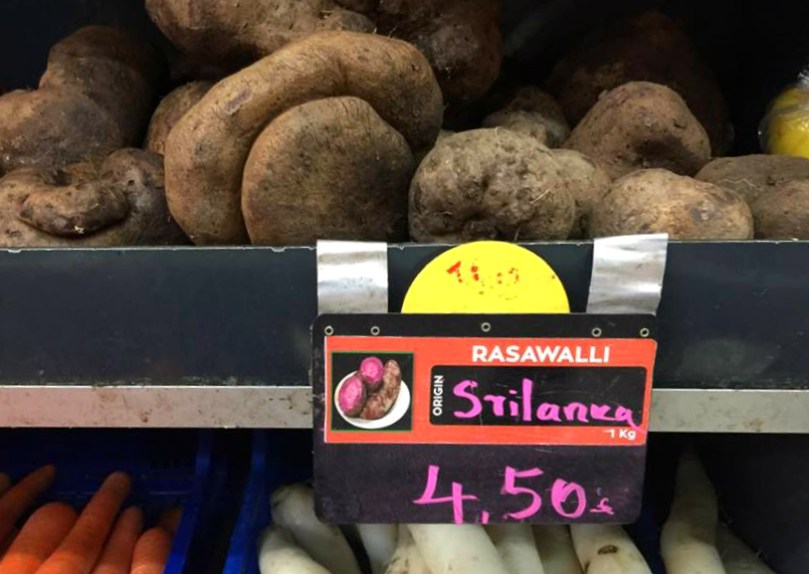
On a recent trip to my favorite cash & carry in the South Asian neighborhood, inspired purely by the photo on the shelf, I picked up a new (to me) vegetable to experiment with. It looked like some kind of great-grandfather root with rhinoscerosy skin, halfway between sweet potato and celeriac. A Google search later on informed me that it’s a purple yam, and that its Latin name is Dioscorea alata. It’s native to Southeast Asia but now also grows in other parts of the world including South America, Australia, China, Africa and the southeast US. Its Tamil name, used on the label in this Sri Lankan shop, is rasa valli kilangu, while in Yoruba, a language of southwestern Nigeria, it’s called isu ewura and in the Philippines it’s ube. The purple yam has apparently gained some fame among Western foodies under this name.

In folk medicine, Dioscorea alata is thought to be effective at treating ailments such as fever, leprosy and hemorrhoids. Some even believe that consuming it increases the likelihood of bearing twins!

rasavalli-on-shelf

In Sri Lanka, the purple yam is often cooked and mashed to make a sweet dish. As it contains a lot of starch, it can also be formed in a mold rather like polenta, and then cut it into slices or other shapes.

For my first experiment with this tuber, I decided to try the basic mashed form. As it doesn’t have much flavor on its own, this yam benefits from a bit of vanilla and/or cardamom (the latter being a traditional ingredient in the Sri Lankan dish). The end result is a slightly sweet mash that seems ideal for breakfast, so I am calling it a porridge. Warm and filling, it could become your new favorite comfort food.

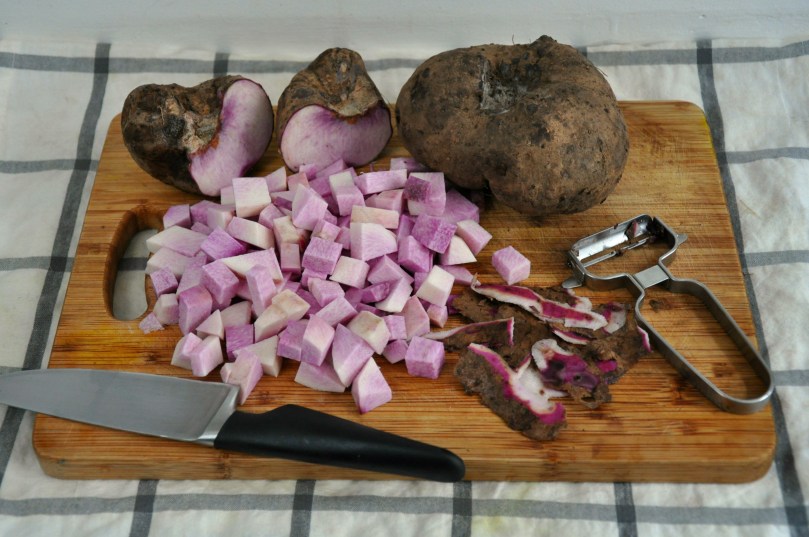
Incidentally, I was disappointed at first that my rasa valli, once peeled, turned out not to be the bright magenta promised by the label photo, but rather a light lavender color. Maybe some are just more purple than others. But lavender is nice too—one of my favorite colors actually. So it’s okay. It’s still sort of (vaguely) in the red-violet range, and therefore acceptable enough for the first recipe to appear on this blog.

dsc_0195b

Sri Lankan purple yam porridge

Serves 2 (as a fairly filling breakfast)

Ingredients

  • 3 cups (350 g) peeled and cubed purple yam (one large yam)
  • 1/2 cup (118 ml) coconut milk from a can, some cream from top of can reserved
  • 2 tablespoons maple syrup
  • 2 teaspoons vanilla extract
  • pinch of salt
  • 1/2 teaspoon ground cardamom (optional)
  • optional garnishes: cardamom, powdered açaí, dried coconut, edible lavender flowers

Begin by peeling the yam. Caution: these yams are quite slippery characters once peeled, and will want to suddenly fly out of your grasp and across the kitchen!

dsc_0204b

Chop the yam into evenly sized cubes.

dsc_0208b

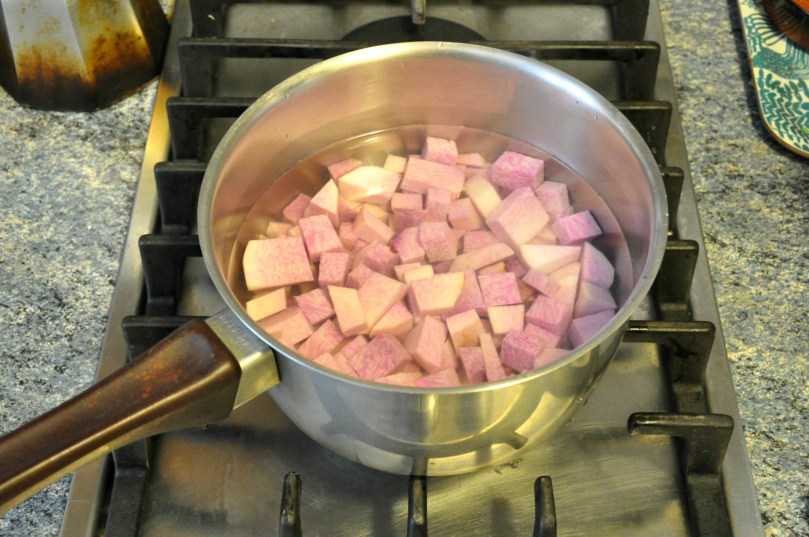
Next, place the cubed yam in a medium-sized saucepan and fill it with enough water to cover it. Bring to a boil, then lower the heat to maintain a gentle simmer. After about 20-25 minutes, test the yam for doneness with a fork. When the cubes seem mashable, turn off the heat and drain most of the water from the pan. With a hand-held potato masher (or large fork), mash the cubes until you have something that resembles mashed potatoes. Alternatively, you could process them with an immersion blender or in a food processor, but they will be so soft that this isn’t really necessary, and the partially chunky texture is kind of nice.

dsc_0225b

Open up a can of regular (not reduced-fat) coconut milk. Remove a couple tablespoons of the thick cream from the top, transfer to a small bowl, mix with a bit of maple syrup and set aside. This will be the topping.

Stir the rest of the coconut milk in the can so that the watery part at the bottom combines with the thicker part toward the top. Add about 1/2 cup (118 ml) of the mixed coconut milk to the saucepan and turn on the heat again to medium-low. Use a bit more if you want the porridge to be more liquidy.

dsc_0227b

Continue mashing the yam together with the coconut milk until you achieve a uniform consistency. Now add the maple syrup, vanilla, salt and optional cardamom and combine well. Taste and add more maple syrup and cardamom if you prefer it sweeter or with a stronger cardamom flavor. Alternatively, you can drizzle extra maple syrup on top of the porridge once it has been transferred to the bowls.

dsc_0230c

Transfer the porridge to two medium-sized bowls (or one larger bowl to share, for romantic types!) and top with the reserved sweetened coconut cream, which will melt a bit. Garnish with added ground cardamom, ground açaí (shown here), dried coconut or edible lavender flowers. Enjoy!

Variations: use regular yams or sweet potatoes, vary the spices (cinnamon, nutmeg, etc.), add golden raisins or chunks of fruit.

Little South Asia

Some years ago, I lived in San Francisco—still one of my favorite cities. One of the things I loved about it was its neighborhoods populated by minority ethnic groups, including Chinatown, North Beach (Italian), the Mission (Latin American), Japantown and even a tiny French area (a few restaurants, a French church and the French consulate between Union Square and Chinatown). I loved the cultural and linguistic plurality these areas brought to the city, in the form of distinct architecture, street signs and advertisements in languages other than English, restaurants and grocery stores selling foods from other lands. In some of these districts, especially Chinatown and the Mission, I sometimes felt as though I had stumbled through a portal to another land.

310637_10150294025005690_1012248_n

Like any self-respecting major city, Paris has its minority ethnic neighborhoods too. My favorite one is the area roughly between and around La Chapelle, Gare du Nord and Gare de l’Est, home to large numbers of people whose families hail from Sri Lanka, India, Bangladesh and Pakistan as well as countries farther afield such as Madagascar and Mauritius. There isn’t really an official name for this neighborhood, although I very often hear it referred to as the quartier sri lankais. For the sake of full inclusion I will refer to it here as Little South Asia.

img_1097_c

img_1096

All along rue du Faubourg Saint Denis and the various side streets are shops selling colorful saris and jewelry, sweets and Bollywood DVDs, as well as restaurants and cash & carry stores. Garlands and fluttering mobiles can sometimes be seen decorating the streets for various holidays.

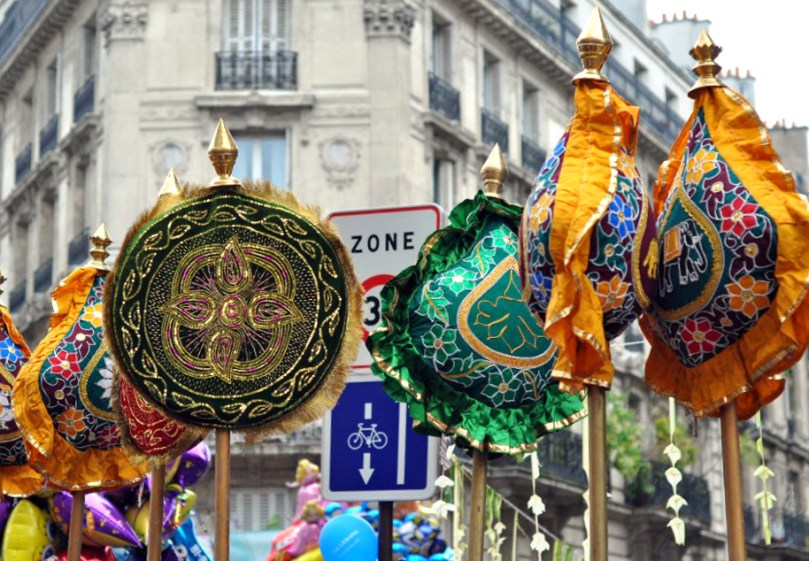
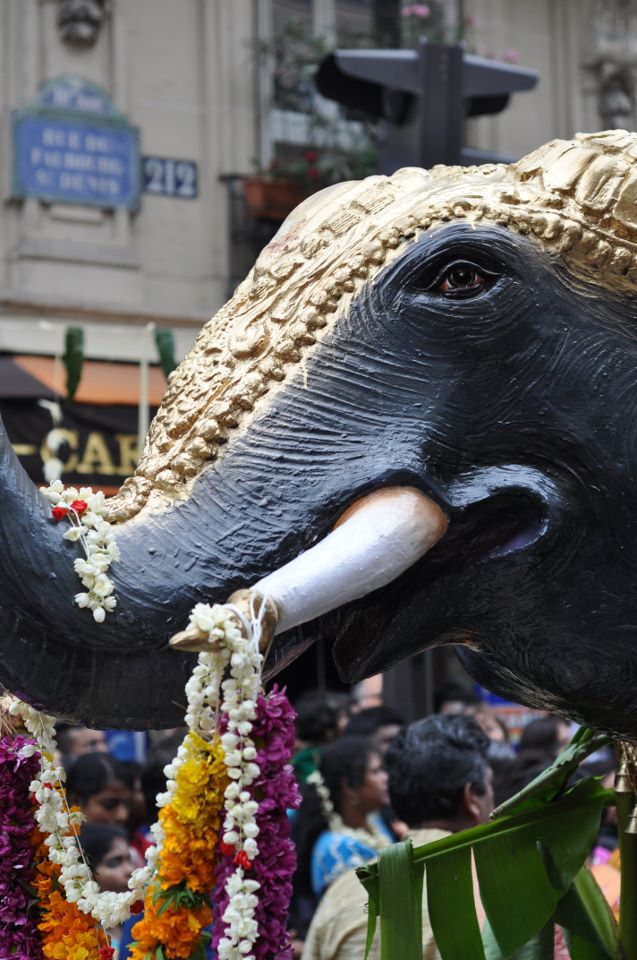
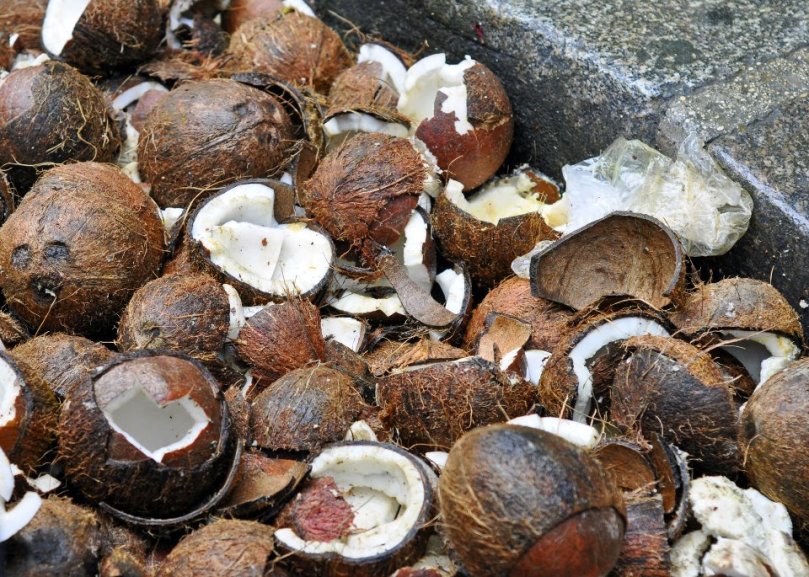
The most festive time of year in this neighborhood is definitely La Fête de Ganesh in late August or early September, when an elaborate and spectacular parade honoring the elephant god winds through the streets from the Temple Sri Manika Vinayakar Alayam (17 rue Pajol) around the La Chapelle area and back again. The participants include women wearing pots of burning camphor on their heads, shirtless men pulling the Ganesh statue down the street with ropes, flutists and drummers, mustachioed dancers with papier-mâché horses and larger-than-life ambulant statues. The festivities are accompanied by energetic smashing of coconuts on the streets and free distribution of cold drinks.

292856_10150294022210690_1999533_n

301692_10150294025505690_5467556_n

296266_10150294024470690_4218445_n

312512_10150294024635690_3348294_n

309759_10150294023630690_873708_n

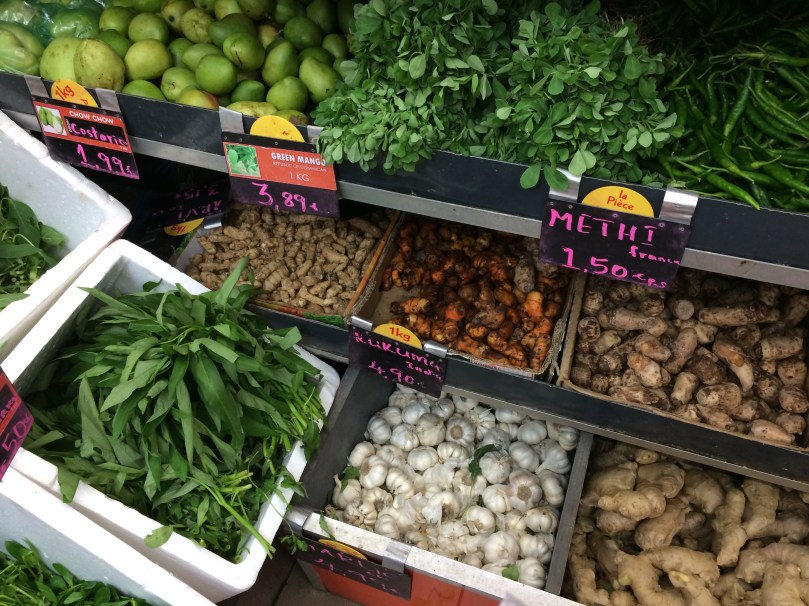
The rest of the year, this neighborhood’s main draw for me is VT Cash & Carry (11-15 rue Cail), a wonderland of spices, lentils, nuts, teas and exotic fruits and vegetables hidden behind a nondescript storefront on a side street. When you enter, the shop at first appears to be fairly small and cramped, as many of the cash & carrys (carries?) in the neighborhood are. But as you proceed further through the coats at the back of the wardrobe, it opens up, revealing a much larger space full of aisles packed to the ceiling with wares and edibles of all kinds.

It is of course a great place for spices, both common and rare, at better prices than at mainstream grocery stores. And it’s also where you can stock up on staples like lentils, rice, flours and grains.

img_1108

Lentils of every description and color!

img_1111

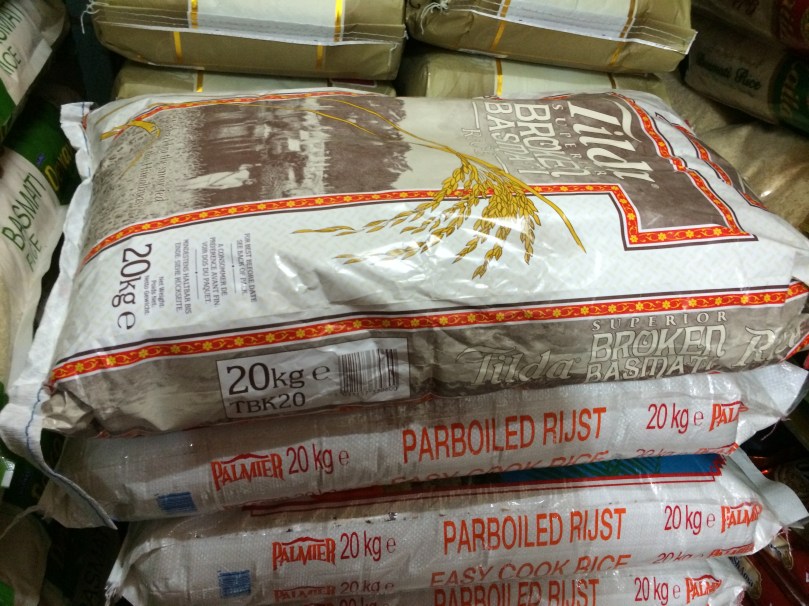
If you’ve got the muscles to carry it, and room at home to store it, a 20 kg (44 lb.) bag of rice is really your best buy. Or, of course, if you run a restaurant…

img_1106

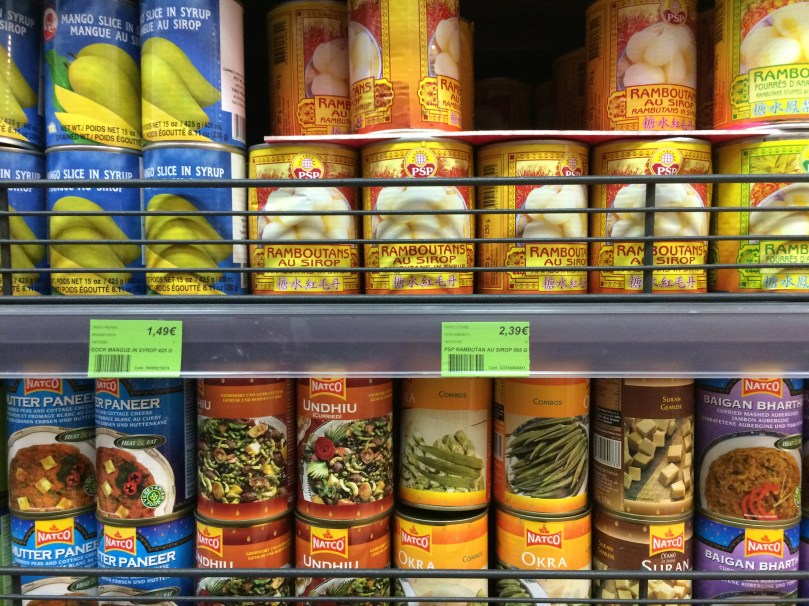
Every time I go here, I plan to get a can of ramboutans to see what they taste like, but then I invariably end up with too many other heavy things and decide to leave it for the next trip.

img_1103b

img_2556b

Some interesting jams and chutneys (ginger, chow chow, candied citrus peel, pineapple, lime, ambarella, passionfruit, tamarind, soursop, baobab and more) and a mysterious English thing called golden syrup that I have not tried yet. My favorite jam ever, which I discovered here, is made with physalis fruit, also known as aguaymanto in Peru and pok-pok in Madagascar, where this particular brand comes from. It is simply heavenly, with a tanginess reminiscent of kiwi and a sweeter side that brings to mind raisins or dried cherries.

img_1122

These metal bowls, usually seen only at restaurants, are an elegant way to serve dal or curries at home.

img_1124

Here, you can get many imported European items that are hard to find elsewhere, such as Marmite (if you enjoy it, or like me are trying to acquire a taste for it), psyllium powder (good for thickening raw desserts), date syrup, the aforementioned golden syrup and (not shown) Heinz baked beans, cream crackers, Scottish and Irish oatmeals and baking ingredients. VT Cash & Carry is also the place to head when you’re looking for your favorite brands of English tea.

img_2563b

Other often-tricky-to-find items include fonio, an African semolina, and peanut butter. Yep, in France peanut butter is a somewhat exotic item. You can still usually find it at regular grocery stores, but at really high prices. My favorite place to get PB is actually at Franprix, in their growing organic & fair-trade section, both because of these characteristics and because the taste is just nice.

img_1123_b

Some ready-made sauces in foil packets that you immerse in hot water to heat up. Some of them are vegan (just check the ingredients carefully).

img_1125

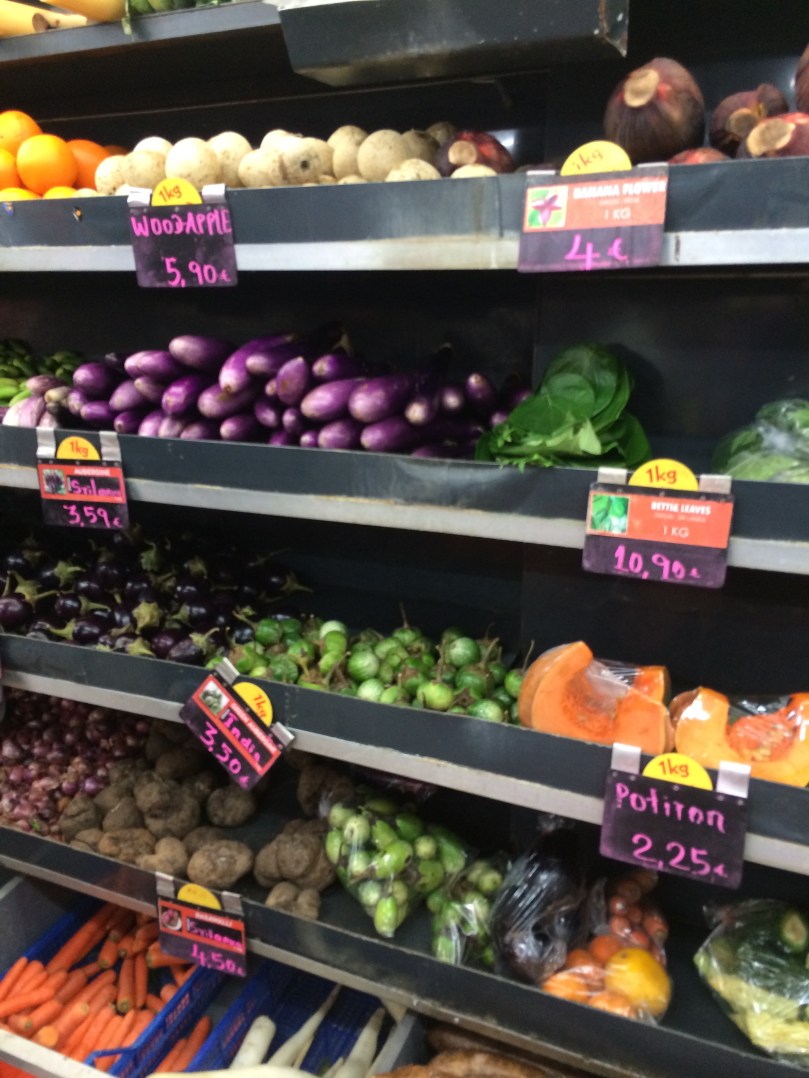
The produce section always contains a few items I’m unfamiliar with, so I sometimes buy things to find out for myself what they are and how they taste (trying to remember to note down the name before leaving the store!). Here, among other things I was already able to identify, we have fresh and dried turmeric root.

img_1127

I did once buy a wood apple in spite of an Indian fellow shopper’s warning that they aren’t very good. Turns out she was right!

Also available toward the front of the store is sugarcane, young coconut (good for raw dishes) and fresh aloe leaves.

img_2565b

If after your lengthy shopping experience you need to rest a bit before facing the crush of people on the metro ride home, pop into one of the three Krishna Bhavan restaurants on the same street (at 15, 21 or 24 rue Cail) for a tasty bite. At the one shown above you can also get take-out veggie samosas at the front counter for €1 a piece.

Enjoy your explorations!

Vide-grenier

Every fall, an event is held in my neighborhood that I look forward to with much the same excitement I used to feel when I was little and Christmas was approaching: the vide-grenier. Literally “attic-emptying”, it’s what we in the States call a rummage sale.
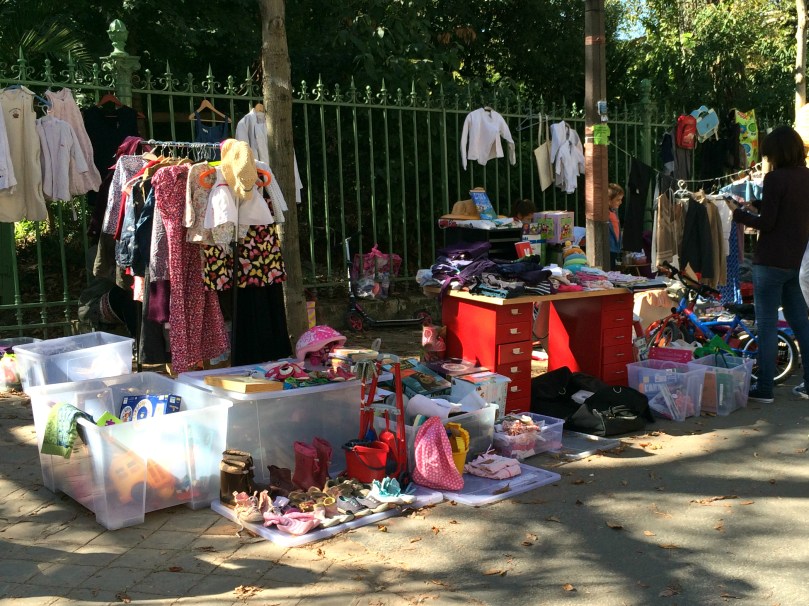
Paris is also home to the largest antiques market in Europe, Le Marché aux Puces de Saint-Ouen just north of the city limit. It’s like a gigantic partially outdoor museum of beautiful furnishings and art, and I love to visit it, but it can be a source of frustration in that the prices are often prohibitive. This is where rummage sales become an attractive alternative. But they’re also an excellent way to renew your wardrobe or book collection at low cost while helping maximize the longevity of consumer goods and protesting planned obsolescence. Plus, pretty much everything you find is unique.

img_0919b

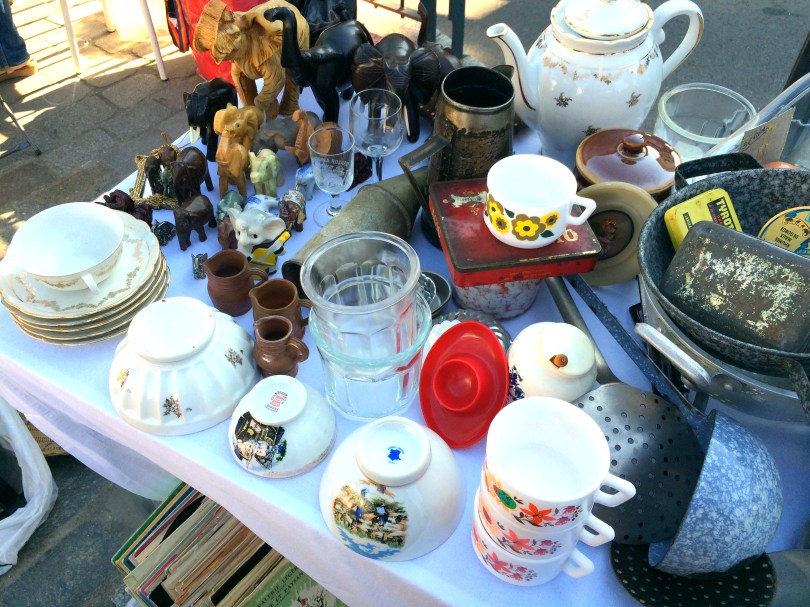
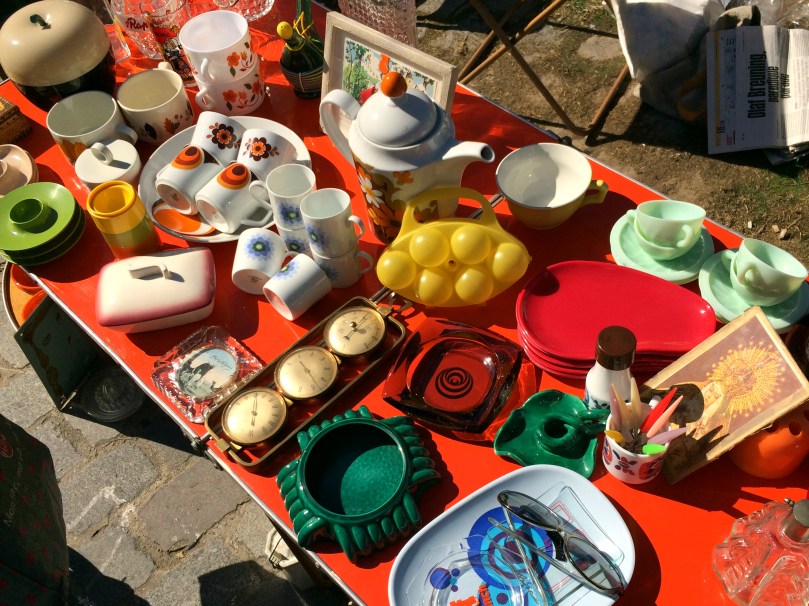
For a small sum, neighborhood residents can sell unneeded items from a space on a street bordering the park or an adjoining street a block away. Like at rummage sales all over in the world, you can find dishes, clothes, books, jigsaw puzzles and Scrabble games.

img_0940b

Everything 60s at this table. I adored the color of the deep turquoise ashtray, but couldn’t talk myself into buying an ashtray.

img_0931b

Pre-loved mystery novels with yellowing vanilla-scented pages. I love the typeface and simple illustration.

img_0914b

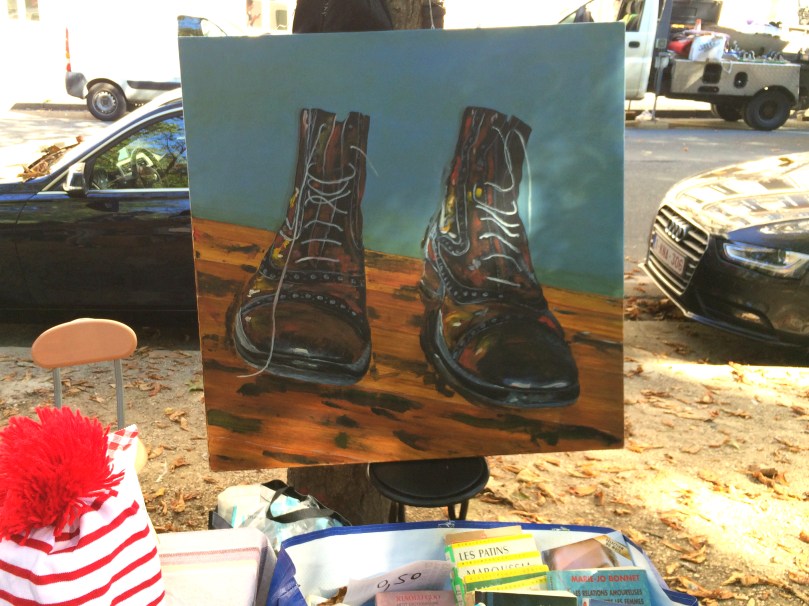
I quite liked this large oil painting, but don’t have enough wall space at my place. But it would be perfectly at home in a cobbler’s shop (of which there are still many in Paris).

img_0907b

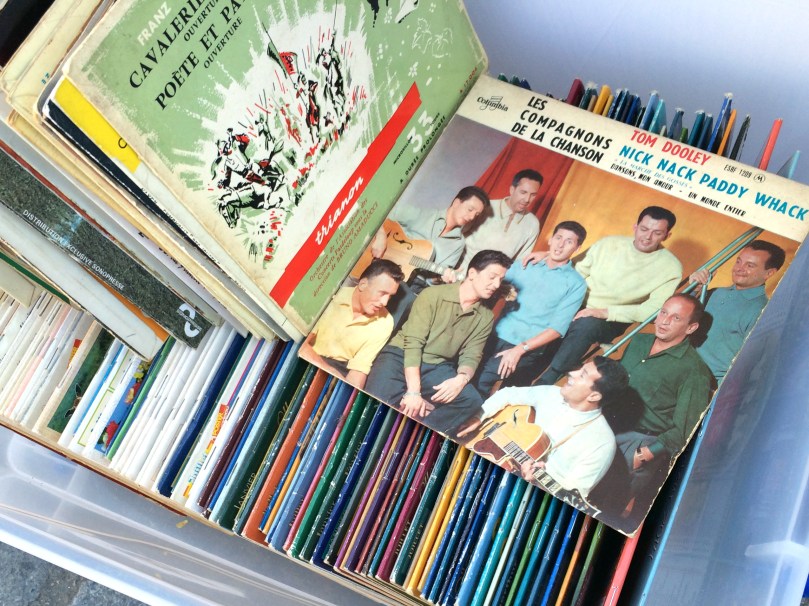
Like Proust and his madeleines, one look at an album like this whisks me back in time to my grandparents’ house.

img_0922b

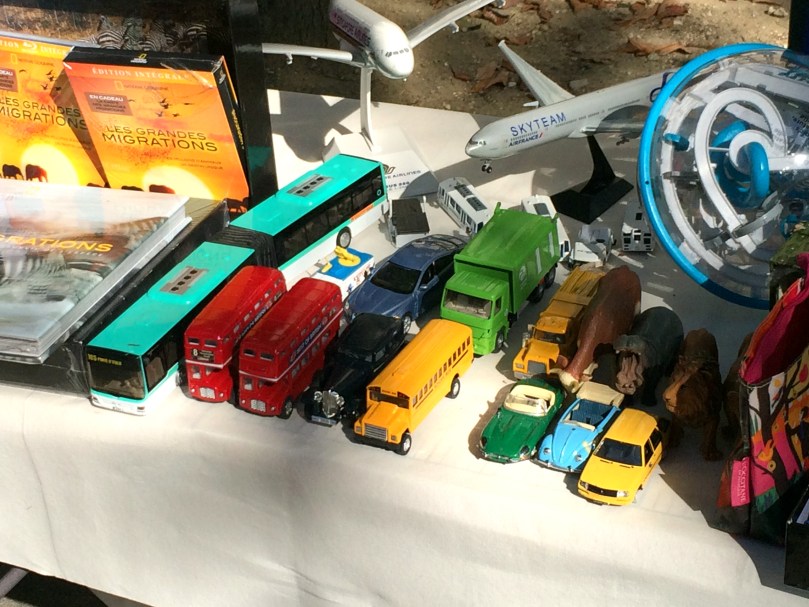
This table was run by a man and his pre-teen son, who seemed to be liquidating his toy-car collection in preparation for adulthood. I bought the Paris bus (more on that later) but soon noticed that one of the wheels was missing. The boy briefly rummaged around for it at the bottom of a box to no avail, and then, regaining control of the situation, puffed out his chest and instructed his father to refund me 50 cents.
img_0929b

What seems like a reasonable thing to buy while on vacation often ends up at a rummage sale. Souvenir plates from various European destinations are a mainstay of Parisian sales. Andorra is a common one, for some reason.

img_0925b

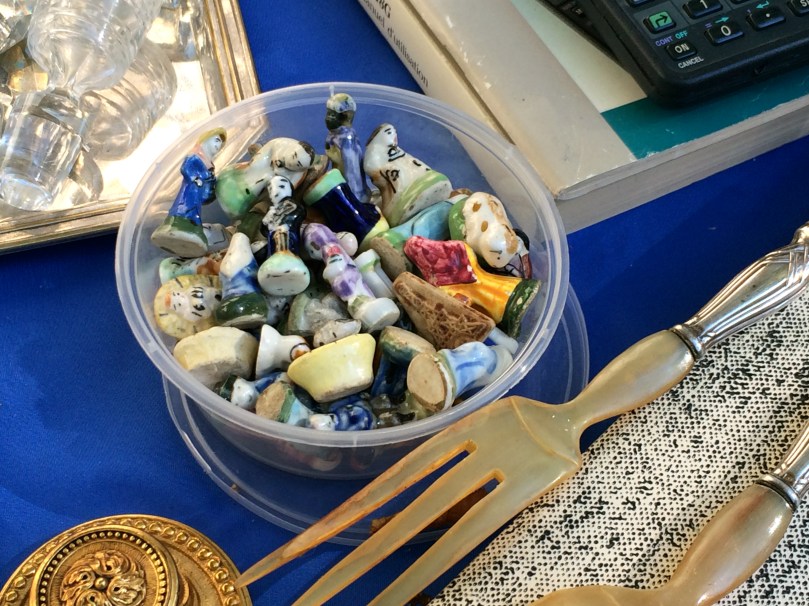
Another item you always find at French rummage sales is ceramic fèves from inside the galette des rois (king cake), which is traditionally eaten in January. Whoever gets the piece with the fève hidden inside is the king or queen of the evening, and gets to wear the paper crown supplied with the cake. Some people become serious collectors of fèves, which are often figurines of people in medieval dress but can take other forms. The word fève means bean, as a dry bean was originally the thing hidden inside these cakes when it first came into being some 300 years ago. I picked up two of these for 50 cents each.

img_0948b

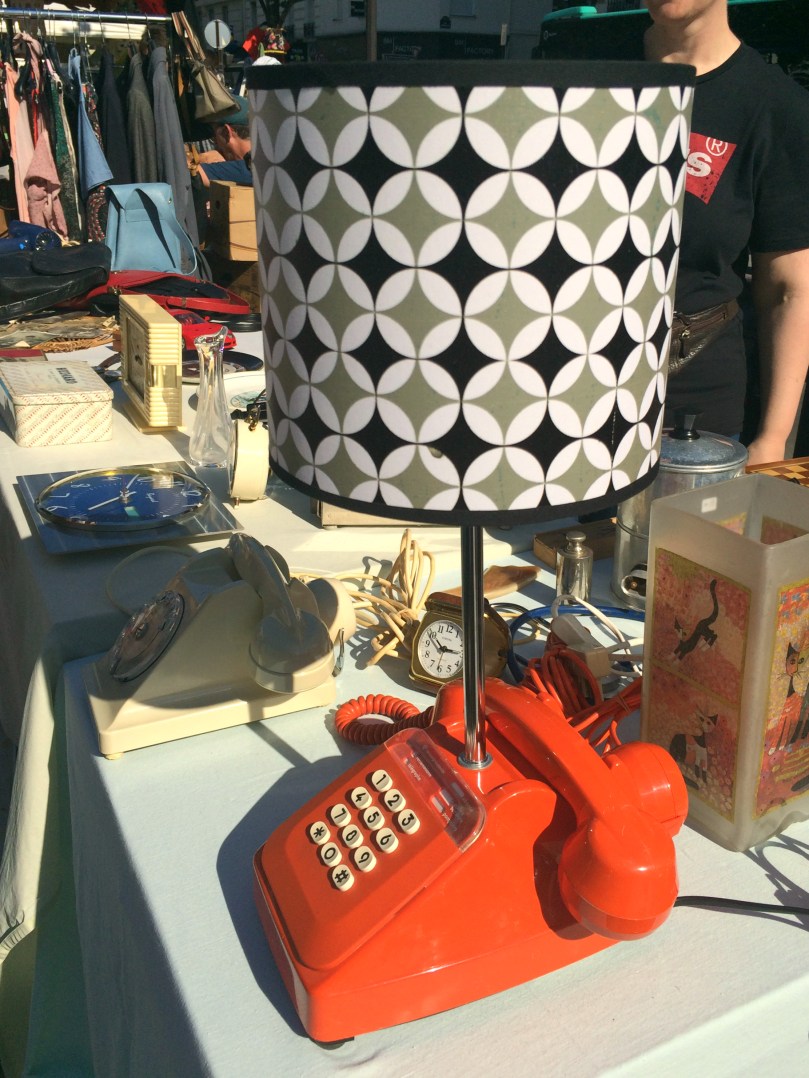
An ingenious telephone-lamp, from the 60s and made in the 60s, as the stand-keeper explained. Both parts work! Somehow I can’t help thinking of Jemaine’s camera-phone on Flight of the Conchords.

So what did I end up taking home?

img_1029b

One of my best finds this year! A recipe book whose title could be translated Cooking with the Mafia—now that’s something you just can’t refuse. The lady at the stand, recognizing my accent, told me in very good English that her mother was American. She threw in this little cookbook for free. What is American cuisine? Even I am not sure.

img_0975b

A set of presses for making beautifully shaped turnovers and ravioli. May just come in handy for the Mafia book!

img_1051b

A set of old metal canisters for tea, coffee and sugar.

img_1055b

My personal collection of fèves, with a 50 euro-cent piece (similar in size to a US quarter) for scale. The pink lady and purple guy in the back row are the new acquisitions.

img_1026b

The bus! I think this is my favorite among all the things I found. I love that it’s a replica of the real buses of Paris (even bearing the RATP logo), and I find it so charming that a vehicle as decidedly unglamorous as an articulated city bus was manufactured in miniature for children who, one imagines, would normally be more interested in racecars. I also couldn’t resist getting this mini Paris garbage truck for my three-year-old nephew, who has a burning passion for anything on wheels. I often take photos for him of the real thing—much to the amusement of the garbage-truck men, when they catch me—and send them to his mom via Telegram. Actually, I have a feeling he’ll end up with the bus too.

img_1020b

All aboard for Porte d’Italie!

My neighborhood has its big vide-grenier only once a year, but there are other ones in different parts of the city most weekends. Sometimes they’re devoted to higher-priced antiques, art or stamps, in which case it might be referred to as a brocante. Whether you live here or will just be passing through, you can check out this dedicated site to find upcoming vide-greniers all over France.